7 Best Chipping Tips to Save Shots Every Round

Disclaimer: This post may contain affiliate links. As an Amazon Associate, I earn from qualifying purchases—at no extra cost to you.
Chipping might not be as exciting as hitting bombs with the driver, but it's one of the most important skills if you want to shoot lower scores.
Even the best golfers in the world only hit roughly 65% of greens in regulation. Scratch golfers hit about 10% fewer than that.
In other words, no matter how good your ball striking becomes, you're going to miss greens, and your short game needs to be ready when you do.
A reliable chipping game doesn't mean you need Phil Mickelson's hands or a collection of fancy flop shots. For most golfers, it's about developing a few predictable shots, making smarter decisions, having a good routine, and basic mechanics.
In this guide, I'll share some of my best chipping tips to help you simplify your technique, practice more effectively, and save more shots around the greens.
7 Best Chipping Tips
Short game is one of the five pillars of playing Wicked Smart Golf. Learning a basic chipping/pitching motion is much easier than changing your swing and can help you save shots every round.
Here are some of my favorite chipping tips from my books, Wicked Smart Golf and Wicked Smart Golf II, to help you simplify your short game and shoot lower scores.
1. Putt Whenever Possible
One of the biggest short game mistakes is automatically reaching for a wedge when you miss the green. Golf is a game of percentages, so follow this simple rule:
If you can putt it, putt it. If you can’t putt it, chip it. If you can’t chip it, pitch it.
Putting keeps the ball on the ground and eliminates many of the big misses that come with a wedge. As the saying goes, a bad putt is usually better than a bad chip.
When putting from the fringe, use your normal routine and stroke. The biggest adjustment is accounting for how much fringe the ball needs to travel through. Thick grass requires a little more speed, while tightly mown fringe might play almost like the green itself.
If a putter isn't a great option but you still want to keep the ball low, experiment with a hybrid or 7-wood chip. Set up similarly to a putt and let the club pop the ball over the fringe before rolling toward the hole.
The goal isn't to hit the coolest shot, it's to hit the highest-percentage shot.
2. Nail Your Setup
If you can't putt it, your next decision is typically between a chip or a pitch, and the setup should change depending on the shot.
For a basic chip, choke down 1–2 inches and stand slightly taller so the handle is more upright. This makes it easier to create a putting-like motion and get the ball rolling quickly.
Ball position can change based on trajectory. Move it back for a lower shot or slightly forward when you need more height. With a standard chip, don't expect tons of spin, especially from the rough. The goal is to get it onto the green and rolling like a putt while missing the fringe.
A pitch requires more loft and a slightly different setup. I tend to play the ball more forward, use a more normal posture, and lower the handle to help add loft (if needed).
Don't use one setup for every greenside shot. Match your setup to the trajectory you need.
3. Adopt a Short Game Tempo
Tempo isn't only important for your full swing.
While the full swing typically works well with a 3:1 tempo, chips, pitches, bunker shots, and other partial shots benefit from a 2:1 rhythm—the backswing takes roughly twice as long as the downswing.
For me, that change happens inside about 75 yards or whatever is a partial wedge.
Why does it matter?
Because poor tempo creates one of the biggest short game killers: deceleration. Take the club back too quickly or too far, and you'll often slow down through impact. Go back too slowly, and you might compensate by aggressively accelerating through the ball.
Instead, think of your short game motion more like a pendulum—smooth back, smooth through.
I regularly use the short game setting in the Tour Tempo app when practicing chips, pitches, bunker shots, and even putting. Spend five minutes working with the tones at the beginning of a practice session, and you'll start developing a much more repeatable rhythm.
Better tempo → better contact → a more predictable short game. Watch this video from John Novosel Jr. (creator of the Tour Tempo app) to learn about short game tempo.
4. Always Analyze The Lie
Before choosing a club or shot around the greens, always analyze the lie. The ball's position in the grass will determine how it comes off the face and how much spin you can expect.
A flyer lie is when the ball sits up nicely in the rough. Expect it to come out faster, travel farther, and spin can vary based on the type of flyer lie.
If the ball is sitting down, expect very little spin as you don't have friction. Play it slightly farther back, use enough loft to escape the rough, and make sure you accelerate through impact. Since you'll typically generate less spin, plan for the ball to release once it lands.
Don't decide on the shot you want to hit before looking at the lie. Let the lie dictate what's possible first.

5. Locate Your Landing Zone
When you miss the green and are chipping or pitching, having a clear target is just as important as it is for full shots—it gives your mind clarity and focus. I like to think of this target as your landing zone, the specific spot where you want the ball to land on the green.
This spot will vary with each shot based on factors like green conditions, slope, and break. Selecting a landing zone gives your mind something specific to focus on.
Just like with your full swing, you want to visualize a clear picture of the shot’s outcome. This mental clarity allows your body to execute the shot more effectively and increases your chances of getting up and down.
Chipping rule: unless you’re extremely short sided, make sure the landing zone is always on the green.
Landing a chip or pitch in the rough or fringe is unpredictable—sometimes the ball skips through cleanly, while other times it gets stuck, leaving you with another tricky shot. To avoid this, I recommend setting your landing spot 3–5 feet past the fringe (when the pin allows).
Landing too close to the edge risks hitting the collar, which kills backspin and leaves you with a much longer putt. Which, as you know by now, hurts your chances of getting it up and down.
You can practice this easily by using a towel or small object as a landing zone at the chipping green. As your skills improve, shrink the target to a coin or ball marker for more precision.
On the course, try to find a landing spot—an old cup mark, a shadow, or a discolored patch of grass—to make it feel like your practice routines. During your pre-shot routine, make this spot the last thing you look at, not the hole, to improve focus and control roll-out. A clear landing target will help you get up and down more consistently.
6. Make Short Game Practice Difficult
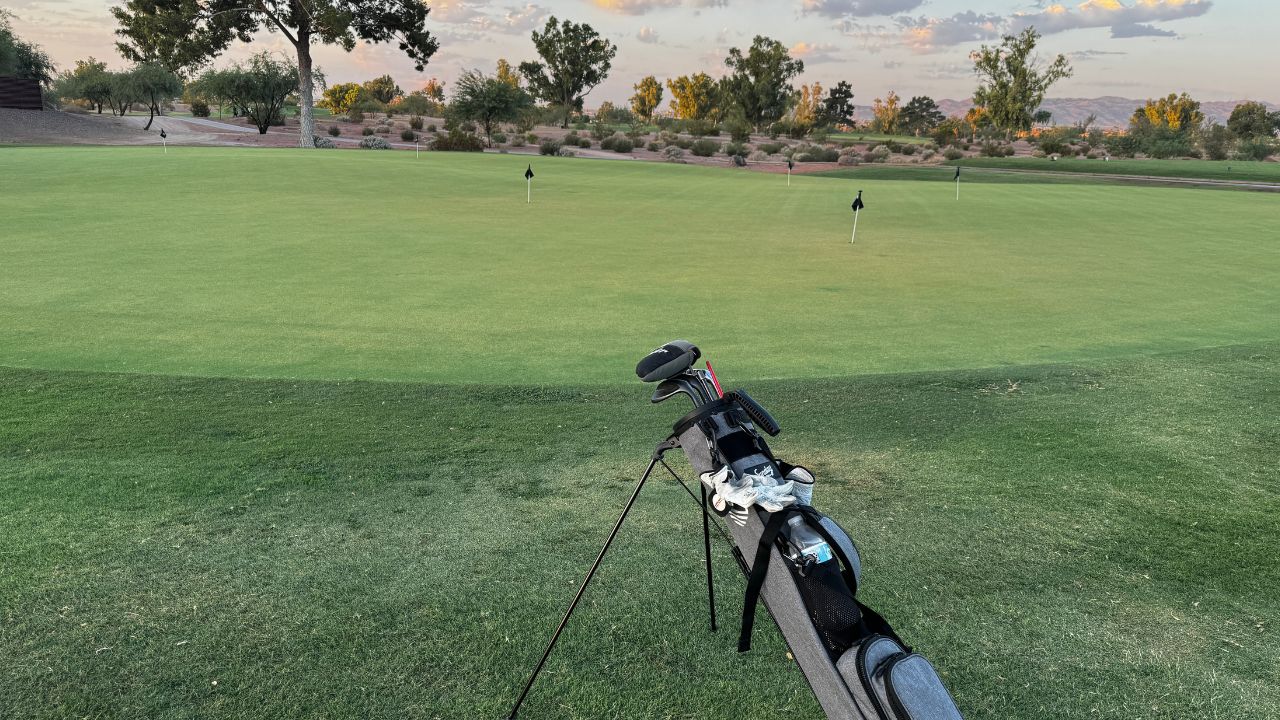
If you want your short game to hold up on the course, stop giving yourself perfect lies in practice. Make practice harder than the golf course.
Instead of dropping 20 balls from the same fluffy lie, create situations that make you uncomfortable:
- Hardpan and tight lies
- Buried lies in the rough
- Ball above or below your feet
- Short-sided chips with little green to work with
Treat short game practice like one giant experiment. Learn how different lies affect contact, trajectory, spin, and roll-out so you're not trying to figure it out for the first time during a round.
This was a huge part of my development as a junior golfer and something I wish golfers did more often. The more uncomfortable you get in practice, the more comfortable you'll feel on the course.
Related: Short Game Training Aids
7. Create a Short Game Routine
Finally, stop treating chips like an afterthought. You need a pre-shot routine for your short game just like you do with your driver, irons, and putter.
Before every chip or pitch, build a repeatable process:
- Analyze the lie and determine what shots are actually available.
- Read the chip like a putt to understand slope, speed, and rollout.
- Identify your landing zone and visualize the complete shot.
- Choose the highest-percentage club and trajectory.
- Take 1–3 rehearsal swings from a similar lie to feel the grass and motion required.
- Take a calming breath, step in, and trust your decision.
- Spend less time over the ball and let the shot go.
Want to learn more? I teach you how to build repeatable routines for your full swing, short game, putting, and even after the shot—so you can stop second-guessing yourself and start playing with more confidence.
👉 Learn more about the Pre-Shot Like a Pro Masterclass here.
My Experience
Short game has played a massive role in my improvement as a golfer.
When I started playing competitively in high school, I went from shooting 124 as a freshman to 74 as a senior. I certainly improved my swing during that time, but a huge part of that nearly 50-shot transformation came from becoming obsessed with short game practice.
I spent countless hours around the practice green hitting chips, pitches, bunker shots, and experimenting with difficult lies. I learned how to turn terrible approach shots into bogeys and ordinary misses into pars.
I still remember one round where I hit only two greens in regulation and shot 74. It wasn't pretty golf, but it taught me an important lesson early in my career: you don't need your best ball striking to post a good score when you have a short game you can trust.
That's why I still prioritize wedges and short game today. Your swing won't always cooperate, but a great short game can keep a mediocre ball-striking day from becoming a terrible scoring day.

Closing Thoughts
Short game is one of the five pillars of playing Wicked Smart Golf for a reason.
You're going to miss greens. You will get bad lies. You will have rounds where your swing feels completely different than it did on the range.
The question is: can your short game save you when it happens?
Start putting whenever possible, improve your setup and tempo, analyze every lie, pick a clear landing zone, make practice difficult, and develop a routine you can trust under pressure.
And if you want more than a handful of chipping tips, that's exactly why I created the 21-Day Scoring Zone Challenge.
Instead of randomly hitting wedges around the practice green, you'll follow a structured system designed to improve your chipping, pitching, distance control, and overall confidence inside the scoring zone.
👉 Join the Scoring Zone Challenge here and start turning more missed greens into saved shots.