15 Proven Dr. Bob Rotella Putting Tips
Disclaimer: This post may contain affiliate links. As an Amazon Associate, I earn from qualifying purchases—at no extra cost to you.
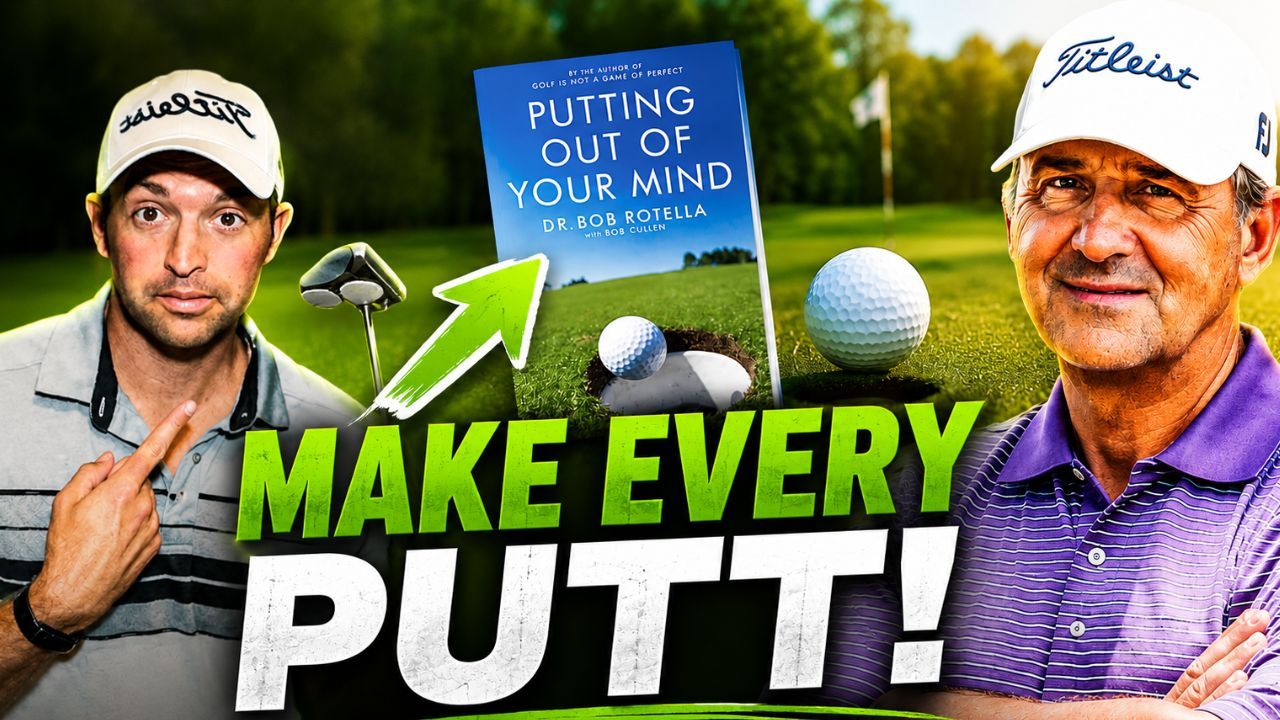
Dr. Bob Rotella's books quite literally changed my life—not just my golf game.
Before reading classics like Putting Out of Your Mind and Golf Is Not a Game of Confidence, I had very little understanding of the mental side of golf. Like most golfers, I believed better scores came from better mechanics. But once I understood how much performance is driven by mindset, confidence, and commitment, everything started to change.
Those lessons didn't just help me become a plus-handicap golfer—they also inspired me to start writing about the mental game and eventually become a mental golf coach myself.
Needless to say, I believe in Dr. Rotella's teachings. I've seen firsthand how powerful they are, especially on the greens.
Putting is arguably the most mental part of golf. You don't need a perfect stroke to become a great putter—you need confidence, commitment, and the ability to trust yourself under pressure.
Below are 15 of my favorite Bob Rotella putting tips that have helped me become a better putter and can help you hole more putts too.
15 Bob Rotella Putting Tips
Putting confuses even the best golfers. As Chi Chi Rodriguez famously said:
"I've heard people say putting is 50 percent technique and 50 percent mental. I really believe it is 50 percent technique and 90 percent positive thinking. See, that adds up to 140 percent, which is why nobody is 100 percent sure how to putt."
To make putting a little less confusing, let's dive into some of the best lessons Dr. Bob Rotella has shared over the years—ideas that have had a massive impact on my confidence, consistency, and scoring.
1. Get Fit for the Right Putter
The first putting tip from Dr. Bob is to find a putter that gives you complete confidence.
This is such an important concept that I dedicated an entire chapter to it in one of my books. Most golfers obsess over buying the latest driver or irons but rarely give their putter the same attention. In reality, it should be the opposite.
Since you'll use your putter on nearly every hole, investing in a professional putter fitting is one of the smartest equipment decisions you can make. A properly fit putter gives you confidence over every putt and can stay in your bag for five, ten, or even twenty years.
Unlike drivers, putter technology doesn't change dramatically every season. Once you find one that fits your stroke and inspires confidence, there's very little reason to replace it.
As Dr. Bob said, “If you think the putter you’re using will help you, it probably will. Conversely, if you think the putter you’re using is worthless, it most likely will be.
The truth, if we define truth objectively, is that it shouldn’t matter much which putter a player uses. A good putter can get the ball in the hole with his shoe if he has to.”
The lesson is simple: confidence matters more than the logo on the putter.
2. Build a Consistent Putting Routine
One of Dr. Bob's biggest themes throughout his books is the importance of having a consistent routine before every putt. Most golfers don't have one and then wonder why they aren't consistently good.
Look at the best athletes in any sport. NFL kickers follow the same process before every field goal. NBA players repeat the same routine before every free throw. Elite performers rely on routines because they help produce consistent results under pressure.
Golf is no different.
Since golf isn't a reactionary sport, you have plenty of time to think. Without a routine, that extra time often turns into doubt, tension, and overthinking.
A simple, repeatable putting routine helps quiet internal chatter, shift your focus to the target, and prepare both your mind and body to execute the putt. It's one of the fastest ways to become a better putter.
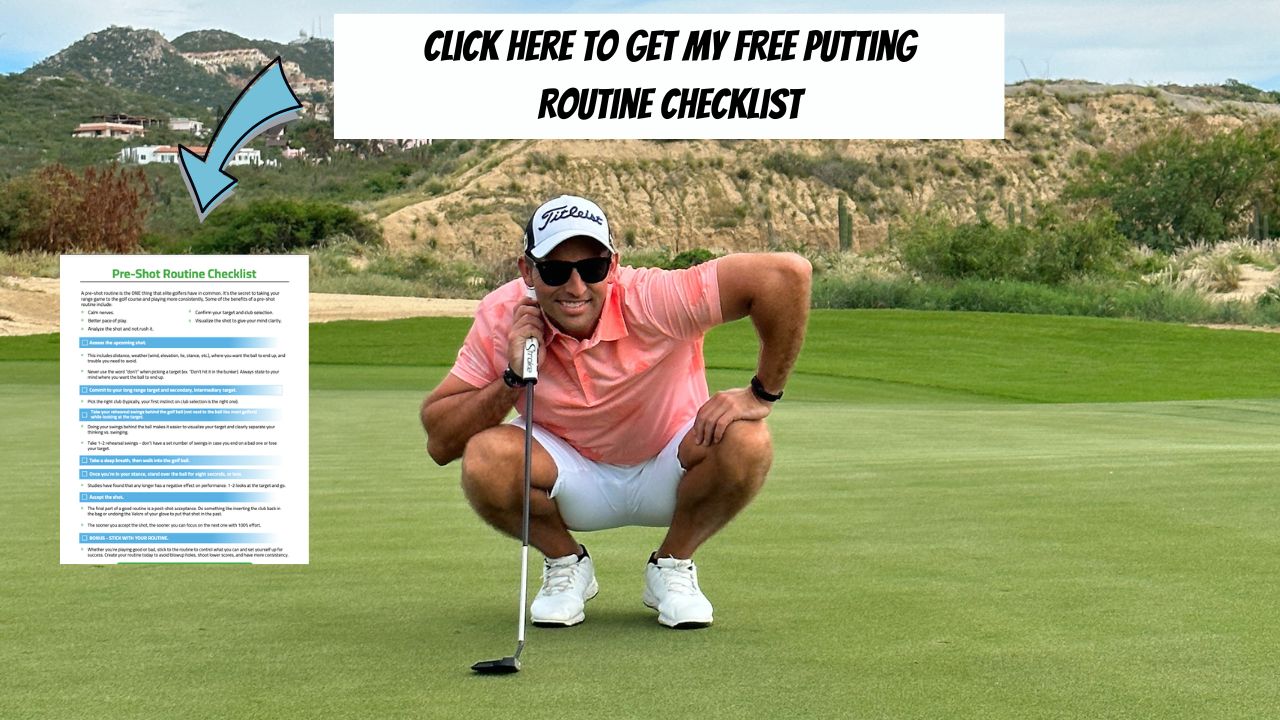
If you want to build a tour-level putting routine (along with routines for every shot in golf), check out my Pre-Shot Like a Pro Challenge.
3. Always Commit to a Read
Have you ever stood over a putt wondering:"Does it break left? Right? Is it uphill? Downhill?"
That uncertainty is a recipe for poor putting. Whenever I have doubt over a putt, I almost always leave it short—even if I guessed the break correctly.
I'm so focused on reading the green that I forget to make a confident stroke with enough speed.
Dr. Bob teaches that once you've made your read, it's time to trust it. Even if your read isn't perfect, a committed stroke gives the putt a chance. An uncommitted stroke rarely does.
Standing over the ball, second-guessing yourself, taking extra time, and changing your mind only pulls you deeper into your conscious mind. That's where tension lives, and tension kills great putting.
So how do you commit?
Trust your first instinct. After more than 20 years of playing golf—and returning to competitive tournament golf over the last several years—I've found that my first read is almost always my best read.
Pick your line, commit to it completely, and focus on rolling the ball with great speed. You'll hole more putts simply by trusting yourself.
4. Minimize Mechanics
One of the biggest mistakes golfers make on the greens is becoming too mechanical.
Watch professional golf for a few minutes, and you'll quickly realize there isn't one "perfect" putting stroke. Tiger Woods, Jordan Spieth, Jack Nicklaus, and Gary Player all have different styles, yet they've all been phenomenal putters.
Dr. Bob never tries to force golfers into one specific technique. Instead, he emphasizes finding a stroke that feels natural and inspires confidence. That's not to say mechanics don't matter—especially if you're new to the game.
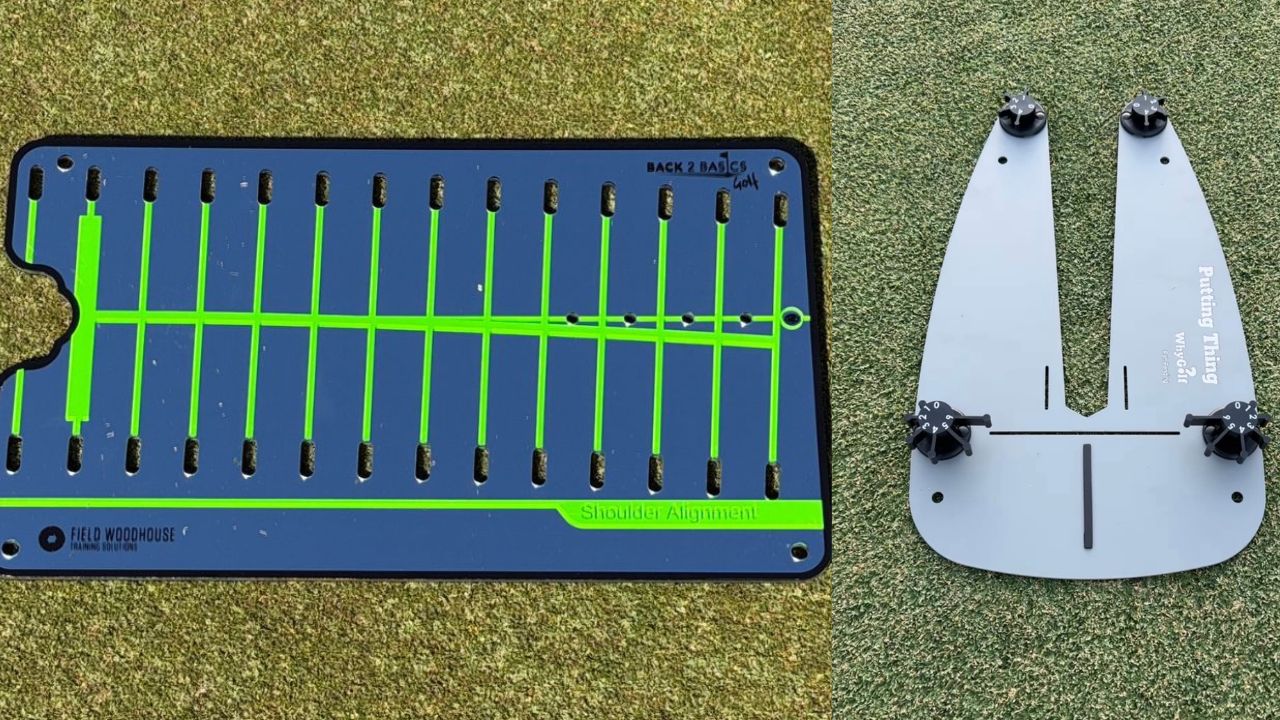
But once you build a fundamentally sound stroke, your focus should shift away from mechanics and toward rolling the ball with freedom and confidence. If you're looking to dial in your fundamentals, these are two of my favorite putting training aids:
- Pro Path Putting Mirror: This is my favorite putting aid as it helps with mechanics, eye position, and can be used indoors or outdoors. Paired with an indoor putting green, you can become automatic. Read my full review here.
- Putting Thing by WhyGolf: This small little putting aid makes it great to establish your start line so you can figure out if you're pushing or pulling putts, then you can use that to work on your fundamentals. Read my full review here.
Unlike your full swing, your putting stroke shouldn't require constant rebuilding. Find a stroke and putter you trust, then spend your energy learning to roll the ball with confidence.
5. Give Your Clear Target
Another lesson Dr. Bob emphasizes is giving your subconscious a crystal-clear target. This is something I struggled with early in my tournament career.
Before Q-School in 2019, I told a sports psychologist that I sometimes felt "brain-dead" on the greens. His advice was simple: give your brain a detailed picture of the putt before you stroke it.
Now, instead of standing over the ball with vague thoughts, I'll tell myself something like:
"This is an 8-foot downhill putt that breaks left to right. Start it just outside the hole and let it die into the center at six o'clock."
Does it always happen exactly like that? Of course not. It's golf.
But creating a clear mental picture gives your subconscious a specific job to accomplish instead of filling your mind with doubt or swing thoughts.
The clearer your target, the more committed your stroke becomes.
6. Master the Short Putts
One of the biggest lessons I've taken from Dr. Bob is to spend far more practice time on short putts—especially those inside six feet. This is where golfers save the most strokes.
Even the best players in the world only hit about 70% of greens in regulation, meaning they're scrambling for par nearly one-third of the time. Those rounds are often determined by whether they can consistently hole putts from two to six feet.
As Dr. Bob writes, “The short putt, like the lay-up, is the foundation skill upon which all else is built.
It’s no coincidence that basketball teams get ready for every game by practicing lay-ups. It’s equally true that good golfers make sure their short putting skills are always honed.”
When you're automatic from short range, your confidence spreads throughout the rest of your game. Lag putting becomes easier because you're no longer afraid of the comebacker, and your approach shots become more aggressive because you trust yourself to convert the next putt.
I recommend spending roughly 70% of your putting practice on short putts while using your full routine. It's one of the fastest ways to build confidence and lower your scores.
7. Make Putting Practice Competitive
One of my favorite Dr. Bob Rotella putting tips is to make every practice session more competitive. Too many golfers mindlessly roll putts without any pressure.
Then they're surprised when they can't perform on the course with something on the line. Instead, create games that force you to earn success.
One of Dr. Bob's favorites is the 3-5-7 Drill:
- Make three putts in a row from 3 feet
- Then three in a row from 5 feet
- Finish with three in a row from 7 feet
If you miss more than one, start over. This simple game adds pressure, keeps practice engaging, and helps you watch more putts fall into the hole. Over time, you'll build confidence inside seven feet while learning how to perform when every putt matters.
Best of all, you can do this drill almost anywhere—even on an indoor putting mat. Check out other ways to use a putting mat in this YouTube video.
8. Welcome Nerves
Most golfers try to avoid feeling nervous. Great putters do the opposite.
They understand that nerves simply mean they care about the outcome. Instead of resisting those feelings, they welcome them as a sign they're in a meaningful moment.
As Dr. Bob writes in Putting Out of Your Mind:
"Good players have practiced and competed for years precisely because they wanted to win tournaments where the stakes are high. So to them, nerves are a sign that their goal is approaching. They understand that nerves are a challenge, but they want to meet that challenge head-on."
This is one of the biggest mindset shifts you can make. Instead of thinking, "Why am I so nervous?" ask yourself, "How lucky am I to have a putt that matters?"
With a solid routine, competitive practice, and the right mindset, those nerves become an advantage instead of something to fear.
9. Trust Your Touch
If you struggle with three-putts—especially from long range—the issue is usually speed control. Ironically, that doesn't mean you should spend the entire putt thinking about speed.
Dr. Bob explains that great putters don't consciously try to control pace. They trust the feel they've developed through practice.
As he writes, "Brad Faxon, like nearly all the other good putters I know, never consciously thinks about speed when he's putting. He trusts his touch.
When he reads a green and picks out a line, he's also thinking, subconsciously, of a speed that will make that line the correct one... He lets the speed take care of itself. Nearly all the time, it does."
The key is to develop your touch during practice—not while you're standing over the ball.
Once you've picked your line and committed to the putt, trust your instincts and make a free, athletic stroke.
The less you try to steer the putt, the better your speed control usually becomes. This is also a big theme in the Look and Shoot Putting Method.

9. Every Putt is a Greenlight Putt
One of the biggest mindset shifts I've learned from Dr. Bob is to stop trying to simply "lag it up."
How many times have you heard someone say before a 30-foot putt, "I'm just trying to cozy it up there."
I understand the logic. Statistically, golfers don't make many putts from 30+ feet—not even the PGA Tour pros.
But that doesn't mean you shouldn't try. Dr. Bob's philosophy is simple: every putt is a green-light putt. Your intention should always be to hole it.
When you adopt this mindset, two great things happen:
- You'll make more long putts. Every round has a few unexpected bombs that find the bottom of the cup.
- Your misses tend to finish closer. When your eyes and mind are focused on the hole instead of an imaginary three-foot circle, your speed naturally improves.
That doesn't mean trying to ram every putt six feet past the hole.
It simply means rolling every putt with the intention of making it while still allowing the ball to die around the cup if it misses.
10. Stop Caring About Results
This tip sounds backwards, but it's incredibly powerful. Dr. Bob teaches golfers to putt as if they don't care whether the ball goes in.
Think about your own experience. How many times have you casually walked up to a putt with zero expectations and watched it disappear?
Now compare that to the four-footer you had to make. Suddenly your grip tightened, your stroke became mechanical, and you steered the putter instead of swinging it.
Trying too hard creates tension. Tension destroys feel.
That doesn't mean you skip your pre-shot routine or stop caring about playing well. It simply means doing all of your thinking before the stroke, then allowing yourself to roll the ball with freedom.
As I often remind myself, the Golf Gods don't hand out bonus points for trying harder. Trust your preparation, make your stroke, and let the result take care of itself.
This same concept also came up during my interview with DECADE Golf creator Scott Fawcett.
11. Maintain Intensity During the Round
Another lesson from Dr. Bob is to stop riding the emotional roller coaster after every putt.
I've struggled with this myself over the years. Getting frustrated after every miss is mentally exhausting, and by the back nine, you're often more drained from your emotions than from your golf swing.
As Dr. Bob explains:
"Most people who become good at golf have learned that it's best to maintain a low, consistent level of intensity through good shots and bad, because the calmer you are and the quieter you keep yourself, the easier it is to play the game."
This is one of the biggest differences between great players and average golfers. Great putters don't celebrate every make or dwell on every miss. They simply accept the outcome, move on, and prepare for the next shot.
The more emotionally consistent you become, the easier it is to maintain focus and trust your process for all 18 holes. This concept is also discussed in depth in GYRA Golf by Dr. Izzy Justice, another excellent resource for improving your mental game.
12. Quit Dwelling on Missed Putts
One of Dr. Bob's best pieces of advice is to stop replaying missed putts in your mind. Missing putts is part of golf. It happens to everyone—whether you're Tiger Woods, Rory McIlroy, Phil Mickelson, or a 30-handicap.
To put it in perspective, the PGA Tour make percentage from eight feet is only about 50%. The best golfers in the world, on perfect greens, with world-class equipment, still miss nearly half of those putts.
So why do amateurs expect perfection?
As Dr. Bob said, "There's nothing worse for your putting than dwelling on putts you've missed. In fact, it's like multiplying the effects of a missed putt.
If you lie awake after a bad round, replaying missed putts in your brain, it's psychologically no different from actually going out on a green and missing them again, over and over. You're training yourself to believe that you can't putt."
That quote completely changed how I think about post-round analysis. It's perfectly fine to review your round and learn from your mistakes. In fact, I encourage every golfer to do a short post-round recap.
But don't relive the miss emotionally. Instead, ask yourself a simple question: Why did I miss?
Was it the read? Speed? Setup? Alignment? Commitment?
Identify the lesson, write it down if needed, then move on. Learn from the miss—don't live in it.
13. Pick a Specific Spot on the Hole
Do you simply aim at the hole? Or do you know exactly where the ball is going to enter the cup?
Dr. Bob believes the best putters are much more specific. As he writes, "A good putter's target is never simply the hole. He's always trying to putt the ball into the hole, but the hole is much too big to serve as a good target."
One of my coaches, John Weir from Mental Golf Type, taught me to ask a simple question before every putt: "Where is this ball going into the hole?"
I like using a clock-face visualization. A straight putt enters at 6 o'clock, while a left-to-right putt might enter around 8 or 9 o'clock.
14. Play More Golf
One of Dr. Bob's best pieces of advice is simply to play more golf—especially if you want to become a better putter. Practice builds fundamentals, but the golf course is where you learn to perform under pressure.
When I got back into tournament golf, I realized I wasn't putting everything out during casual rounds. That made those nervy three- and four-footers in competition feel much harder than they should have.
If you're serious about improving, stop giving yourself gimmies. Hole every putt during practice rounds so you build confidence, post accurate scores, and prepare for tournament pressure.
15. Find Peace on the Greens
The final lesson from Dr. Bob is to find peace on the greens. Ironically, when I reread Putting Out of Your Mind, I realized a section in one of my own books is called Peaceful Putting—proof of how much his ideas have influenced my game.
Too many golfers treat every putt like it's life or death. They try to control every movement, force the ball into the hole, and end up creating tension instead of trust.
As Dr. Bob Rotella wisely said,"The golf course has to be your sanctuary, the thing you love and the thing you can't be afraid of messing up. Too many golfers are trying not to screw up, and that's getting in the way of actually performing their best."
The best putters aren't fearless—they're free. Let go of trying to be perfect, trust your preparation, and enjoy the challenge. When you stop fearing the outcome, you'll often start making a lot more putts.
Closing Thoughts
Dr. Bob Rotella's putting advice isn't about finding the perfect stroke—it's about building the confidence, trust, and mindset to let your natural ability shine. Master these principles, combine them with a solid routine, and you'll start making more putts while enjoying the game a lot more.
If you're ready to become a more confident putter, check out the Wicked Smart Golf 21-Day Putting Challenge. Inside, you'll get
- 21 Days of accountability to help you stay committed to your new putting habits
- 20 Putting practice plans (indoors + outdoors) whether you have 15, 30, 45, or 60 minutes to work on your game
- 3+ hours of bite-sized training where I'll walk you through my simple 7-Step Confident Putting Framework to help you stop three-putting, improve your speed control, hole more short putts, and finally trust yourself on the greens.
Whether you're trying to break 90, 80, or shoot your career-low round, this step-by-step system will help you become the confident putter your game deserves. Start the challenge today and transform your putting in just 21 days.