Tour Aim 2.0 vs. The B29 Blue Brick Training Aid

Golfers love buying training aids… but most of them end up collecting dust because they either:
- Don’t solve the golfer’s real problem
- Are too complicated to use consistently
- Or they’re trying to fix everything and end up fixing nothing
That’s why Tour Aim and Blue Brick stand out. They each do one thing extremely well — but that “one thing” is completely different. In this Tour Aim vs. Blue Brick review, I’ll compare them both after testing them in practice (and trying hundreds of training aids).
Tour Aim vs. Blue Brick Comparison
Short version:
- Tour Aim is all about alignment, aim, and consistent setup.
- Blue Brick is all about swing path, shallowing, and compression.
Two totally different tools. Two totally different outcomes.
The problem? Most golfers don’t know which one they actually need.
By the end, you’ll know exactly which tool will help you build a more consistent, confident golf game— without wasting money on something that doesn’t fit your goals.
B29 Blue Brick Overview: What It Is & Who It’s Built For
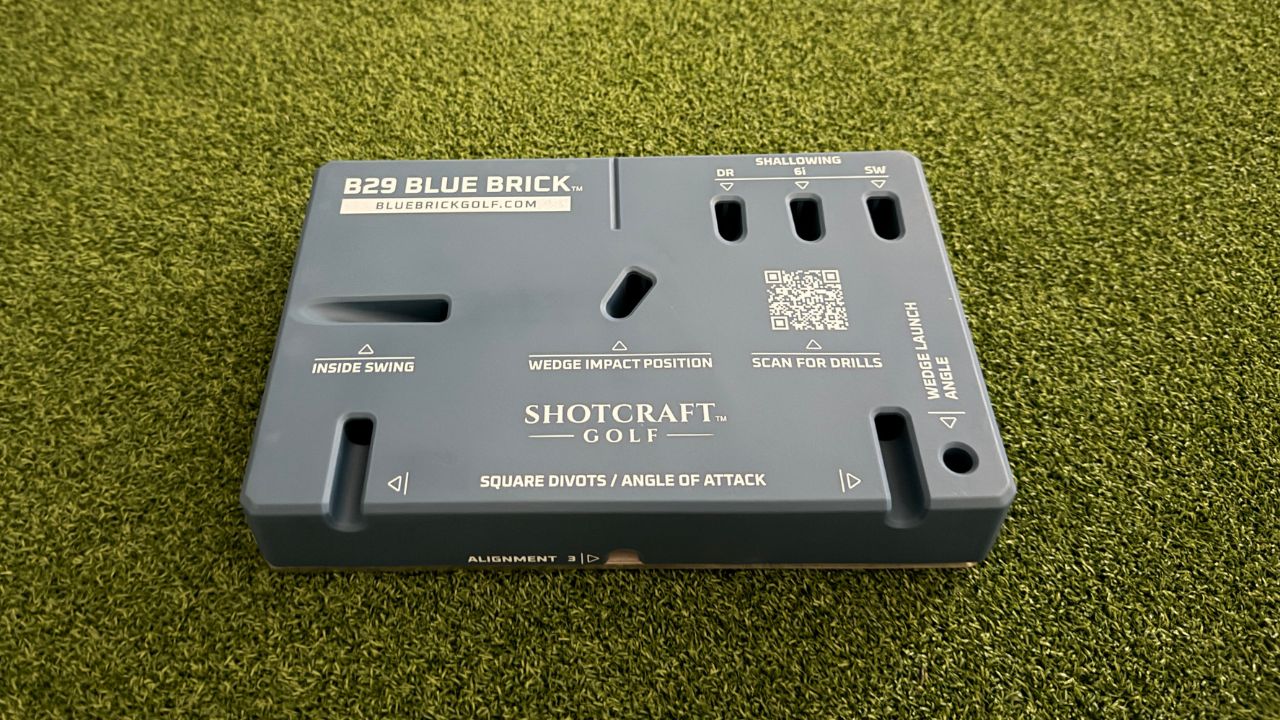
Blue Brick is a compact but heavy training aid designed with one goal in mind: stop golfers from getting steep, over-the-top, and inconsistent at impact.
Instead of relying on “feel,” Blue Brick uses a constraints-based approach. You slide an alignment stick into an angled channel on the Brick, place it behind the ball, and suddenly you have a physical boundary that forces a better motion.
Make your old steep swing? You’ll hit the stick.
Try to reroute the club over the top? The stick punishes you immediately.
Flip the club and lose the shaft lean? You’ll clip the impact-side stick.
There’s no confusion. No guessing. No "I feel like I’m shallowing it." You either make the right move — or you get immediate feedback.
What Blue Brick Helps With:
- Shallowing the club in transition
- Creating an inside-to-out path
- Preventing slices and pull-cuts
- Improving low-point control
- Adding forward shaft lean
- Compressing the ball more consistently
It’s especially good for golfers who practice in a garage, simulator bay, or on a mat during the offseason. The tool sits low to the ground and works on literally any surface — grass, mats, turf, or carpet.
Where It Falls Short:
Blue Brick is fantastic for swing path work, but it's:
- Not ideal for travel
- Pricey for a single-focus tool
- Too heavy and bulky to keep in your golf bag
- Offers zero help with putting or short-game training
- And it’s not something you’ll use during every practice session
This is a specialized tool—great for path issues, not a complete practice system. Want to learn more?
Read my full B29 Blue Brick review here.
Tour Aim Overview
If Blue Brick is all about swing mechanics, Tour Aim is the opposite—it’s about building structure, consistency, and precision into every practice session. But can help with your swing plane too.
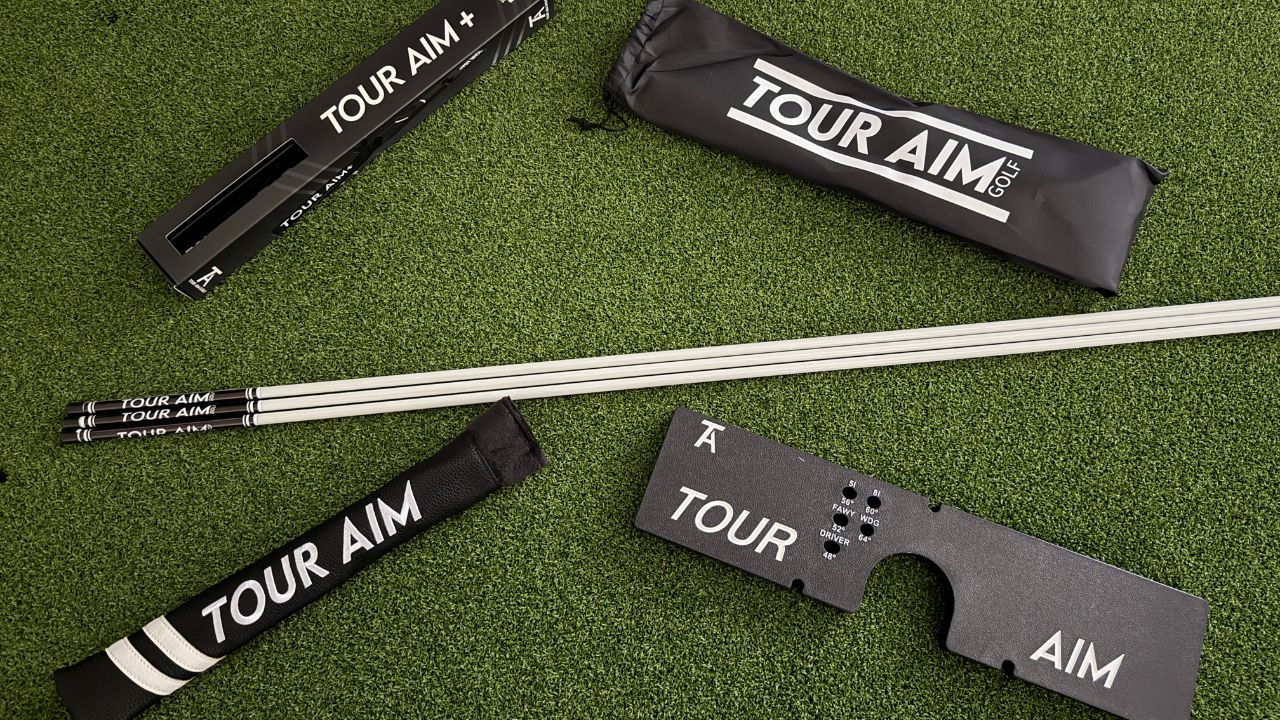
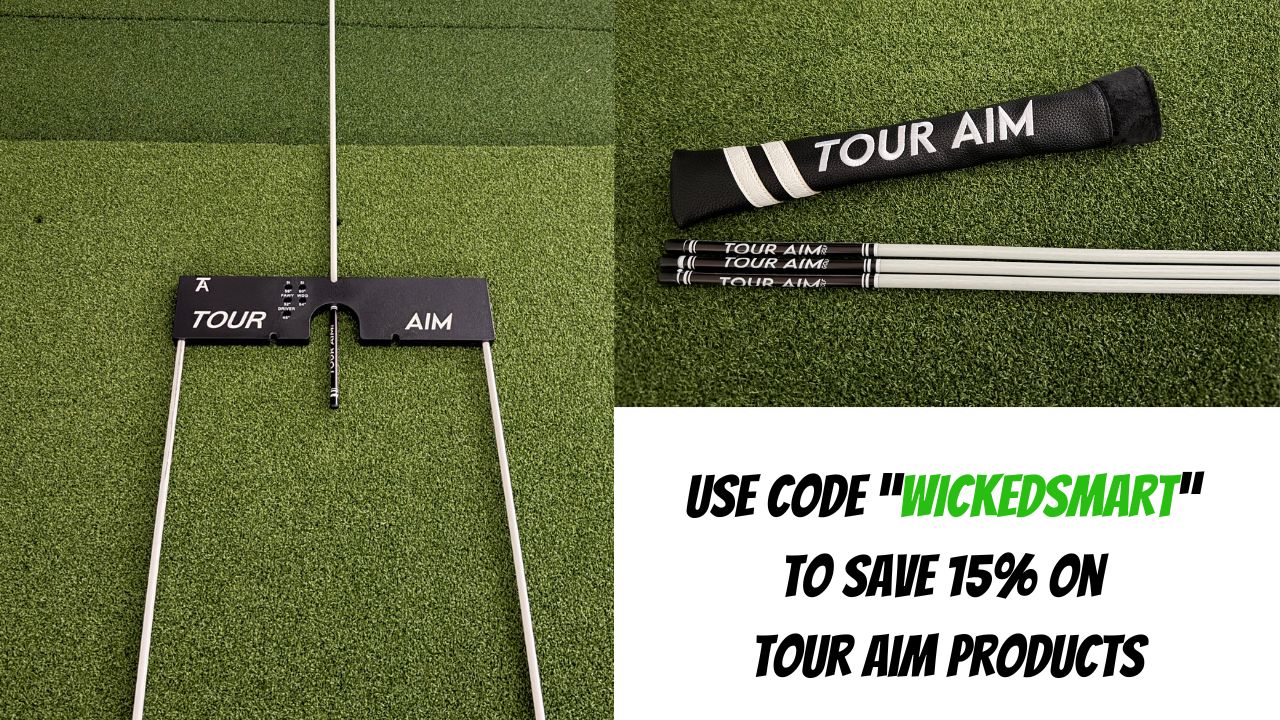
Tour Aim is a lightweight alignment system built around a simple block with multiple stick channels. Slide in one, two, three, or four alignment sticks, and you instantly have a clean, repeatable setup for:
- Alignment
- Aim
- Ball position
- Target line
- Swing start line
- Chipping lanes
- Putting gates
Don’t forget, alignment is wicked important in this game and why the best golfers in the world work on it too. Because if your aim is off by even a few degrees, ball flight, path, and contact all change — even if the swing is “good."
Most golfers think they aim straight, but video often proves otherwise. Even good players routinely aim way left or right without realizing it. That’s why Tour Aim exists: it removes the guesswork and gives you a professional-level alignment station in seconds.
What Tour Aim Helps With:
- Consistent alignment (feet, shoulders, face)
- Dialing in chipping and short game mechanics
- Practicing indoors and outdoors with the same setup
- Building better aim habits (ideal for golfers who are very visual)
- Improving practice efficiency (no more crooked alignment sticks rolling around)
This is the tool that helps golfers stop “practicing randomly” and start practicing with purpose.
Where Tour Aim Falls Short:
- It’s a structure tool, not as much an impact or motion-correction tool
- If you’re looking for a path-correction tool, it’s more limited than Blue Brick
But for what it does—improving alignment and practice quality — it’s one of the highest-value tools on the market. If you're ready to get started, use code "WICKEDSMART" to save 15% on your Tour Aim training aid.
Read my full Tour Aim review here.

My Experience Using Both Training Aids
After using both Tour Aim and Blue Brick in full-swing practice, indoor work, and structured sessions, here’s the honest truth: they are not competing tools. They solve different problems.
Blue Brick
Blue Brick shines when I’m specifically working on:
- Shallowing
- Fixing steepness
- Increasing shaft lean
- Improving compression
It’s brutally honest—if I make my old move, I hit the stick. When I commit to the proper motion, the feedback is immediate.
It’s especially valuable in the offseason or when I’m grinding on mechanics at home. But I don’t bring it to the range, I don’t travel with it, and I don’t use it every session. It’s a targeted tool for specific swing issues.
Tour Aim
Tour Aim is almost the opposite. I use it far more often because every golfer — including low-handicap and competitive players — needs better alignment and practice structure. It’s lightweight, travels easily, and I can set it up in seconds anywhere I’m practicing.
Here’s how I use the Tour Aim as a plus handicap golfer:
- Simple path drills
- Full bag alignment
- Putting start-line drills
- Chipping setup
- Indoor offseason work
Tour Aim has become a staple because alignment is the foundation of everything and I’m a very visual player. I love having the multiple alignment rods inserted for various positions to help see the proper alignment.
How to Choose the Right Training Aid for Your Game
Now that you understand what each tool does, here’s the simplest way to decide which one belongs in your practice routine.
Choose Blue Brick if you…
- Fight a slice or weak pull-cut
- Struggle with an over-the-top move
- Want more shaft lean and better compression
- Can’t seem to shallow the club no matter what you try
Blue Brick is a path-correction tool above all else.
Choose Tour Aim if you
- Want better alignment on every shot
- Struggle with aiming too far left or right
- Want more structured practice sessions
- Travel, hit the range often, or practice on the go
- Want a tool that works for full swing + chipping + putting
- Want something that fits in your bag and is easy to use daily
- Hit it great on the range but lose consistency on the course (from poor alignment)
Tour Aim is the foundation tool that makes every swing more consistent by cleaning up your setup and eliminating silent aim mistakes.
Closing Thoughts: Tour Aim Wins
Blue Brick is good… but it’s pretty one-dimensional in my opinion. It has one job: fix your swing path. And it does that job well.
But it’s heavier, harder to travel with, more expensive for a single-purpose tool, and doesn’t help at all with:
- Putting
- Alignment
- Short game
- Practice structure
- Creative practice - it’s very technical and I think that can overwhelm golfers. I try to use complex training aids (ex. HackMotion) less than 25% of all practice sessions and mostly offseason.
It’s a very specific tool for a very specific type of golfer—someone who struggles with steepness, slicing, or transition—and it pairs extremely well with Clay Ballard’s teaching philosophy (shallowing, compression, inside-out path). If that’s your main issue, Blue Brick can absolutely help.
But for 90% of golfers? Tour Aim is the better buy.
It solves more problems, works in more situations and you can easily take it anywhere. Not to mention, it helps with every part of the game.
Most golfers need better alignment and a consistent routine far more than they need a path-restriction aid. That’s why Tour Aim ends up being the tool I use most often and the one I recommend for the majority of players.
Get Tour Aim today (use code "WICKEDSMART" to save 15% on your investment).