Wrist X vs. HackMotion: Wrist Trainer Comparison
Disclaimer: This post may contain affiliate links. As an Amazon Associate, I earn from qualifying purchases—at no extra cost to you.
So many golfers obsess over their grip and backswing—but what about wrist positions? Have you ever actually looked at them or had a coach assess whether your lead wrist is bowed, neutral, or cupped?
Here’s the thing…
Wrist angles quietly control the clubface, impact position, and ball flight. When the wrists break down during the backswing, golfers are forced into timing-based compensations like flipping or casting, which leads to inconsistent contact and unreliable ball striking.
When wrist conditions are solid, ball striking becomes far more automatic. The swing feels more repeatable and no longer depends on perfect timing to square the clubface.
That’s why wrist training tools have become so popular. But not all of them train wrist angles in the same way—or fit the same type of golfer.
Today, I’ll compare the Wrist-X vs. HackMotion to help you decide which training aid makes the most sense for your game and practice style.
Wrist X vs. HackMotion Comparison
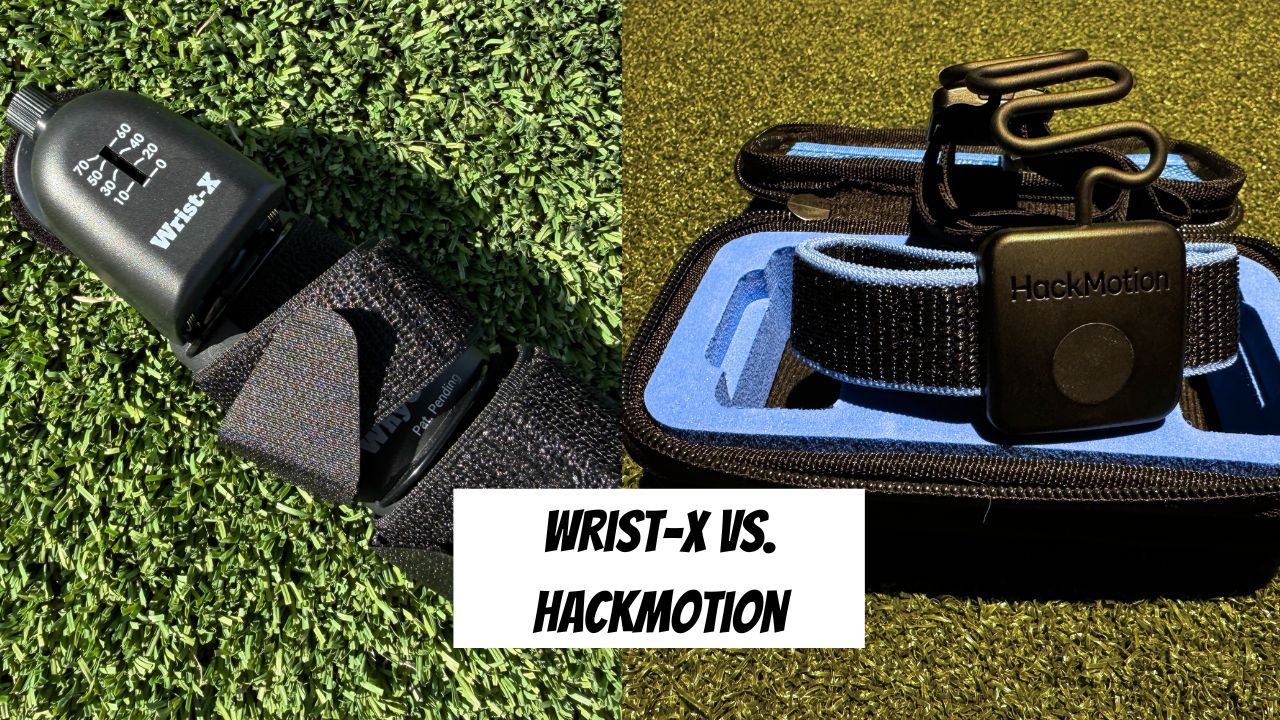
There are a lot of wrist training aids on the market, but two of the most talked-about options right now are the WhyGolf Wrist-X and HackMotion. Both aim to improve wrist conditions and clubface control, but they approach the problem from very different angles.
I’ve tested both, and rather than focusing on marketing claims or tech specs alone, I wanted to compare how each one actually works in practice, how easy they are to use, and how well the feedback translates to real swings on the range and course.
Wrist-X
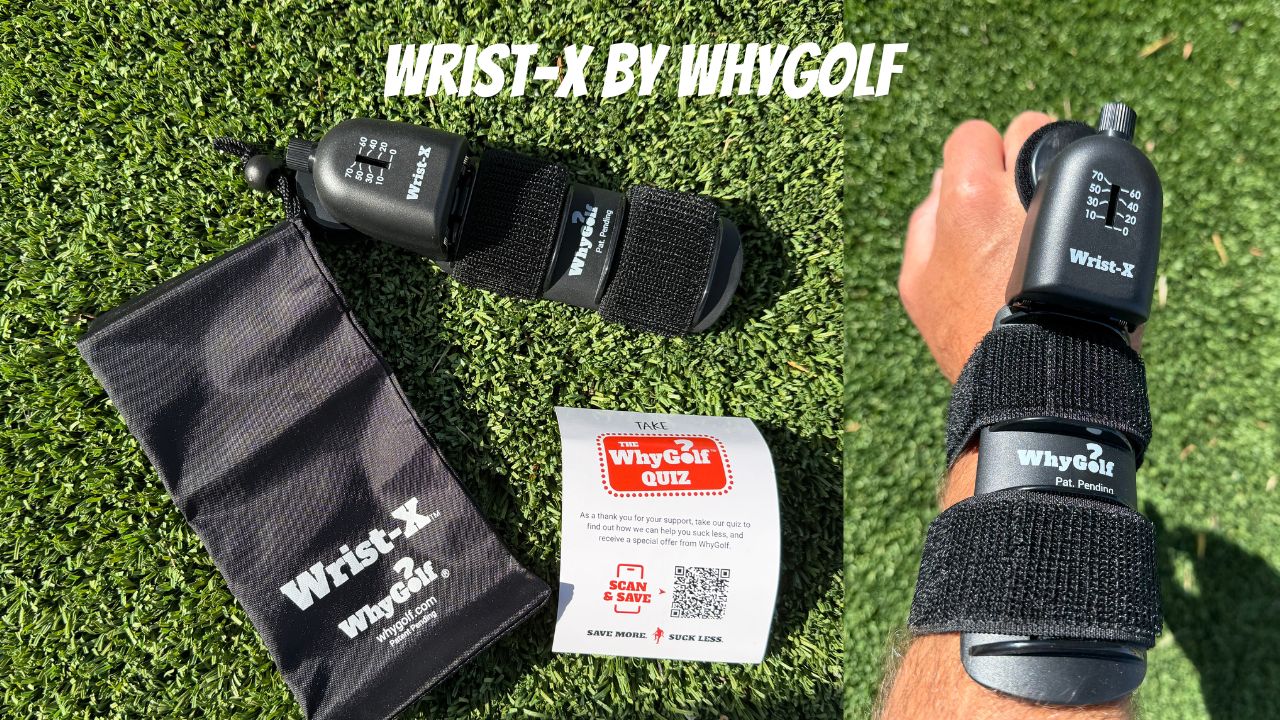
At the 2026 PGA Show in Orlando, I got introduced to this new WhyGolf training aid. The creator, Brad Mason, gave a fantastic demonstration showing how to use it and how it can help golfers.
The WhyGolf Wrist-X is built around a simple idea: help golfers improve wrist angles without adding complexity to practice. Rather than measuring data or forcing positions, Wrist-X uses audible feedback to signal when the wrists are hinging correctly. That sound-based cue helps golfers connect the right movement to a repeatable feel, which is often easier to carry from practice into real swings.
What stands out most is how quickly Wrist-X fits into a normal routine. There’s nothing to sync, analyze, or configure. Strap it on, make swings, and let the feedback guide the motion. That makes it especially useful for golfers who want better wrist awareness without turning practice sessions into technical deep dives.
For a more in-depth look at how Wrist-X works, who it’s best suited for, and how it performs in real practice environments, you can read the full review here:
HackMotion
HackMotion approaches wrist training from a very different angle.
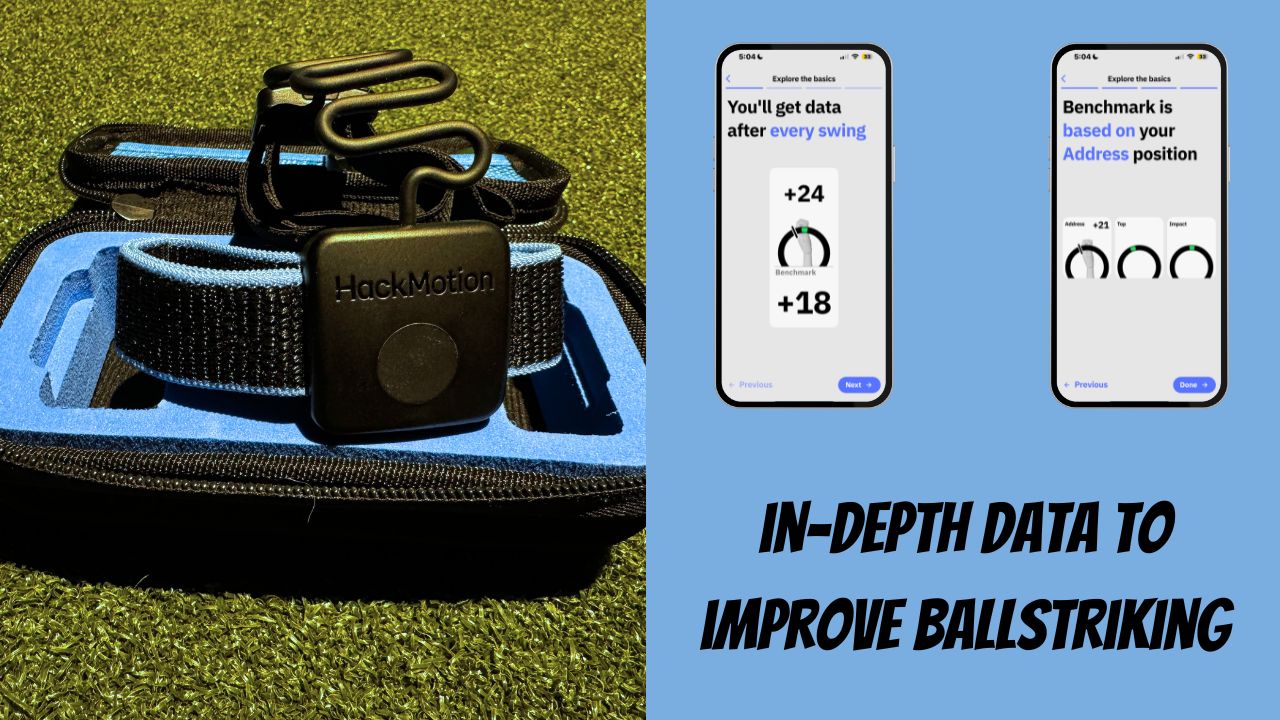
They combine a wearable sensor with real-time data to show exactly how your lead wrist and forearm are moving through the swing. Instead of relying on feel or audible cues, HackMotion gives you visual feedback via an app, showing metrics like wrist bend, forearm rotation, and timing in ways you can track and analyze.
That data-rich feedback can be incredibly useful for golfers who want a more in-depth understanding of their motion, or who enjoy using numbers and graphs to guide practice. Because it connects to your phone, HackMotion can help you track progress over time and see measurable changes in wrist behavior rather than just feel it in the moment.
For a full breakdown of how HackMotion works, the data it provides, and how well it translates to real swings and improvement, you can check out the complete review here:
👉 Read the full HackMotion Review
My Experience
I genuinely like both Wrist-X and HackMotion—but they’re built for different types of golfers.
I’ve been using HackMotion since early 2025, and I’ve been consistently impressed with the technology behind it. The amount of insight it provides goes well beyond the full swing.
The data around wrist angles, forearm rotation, and timing is incredibly valuable, and the newer putting features are especially impressive. For golfers who enjoy understanding why something is happening, HackMotion delivers an enormous amount of useful information.
I recently started using the Wrist-X and have enjoyed how simple and approachable it is. There’s no tech, no app, and no data to interpret—just immediate feedback that helps you develop better wrist awareness.
I can see how this would be extremely helpful for beginners, less tech-savvy golfers, or anyone who wants better wrist positions without diving into swing mechanics. It’s also far more affordable, which makes it easier to recommend to a wider range of players.
How to Choose
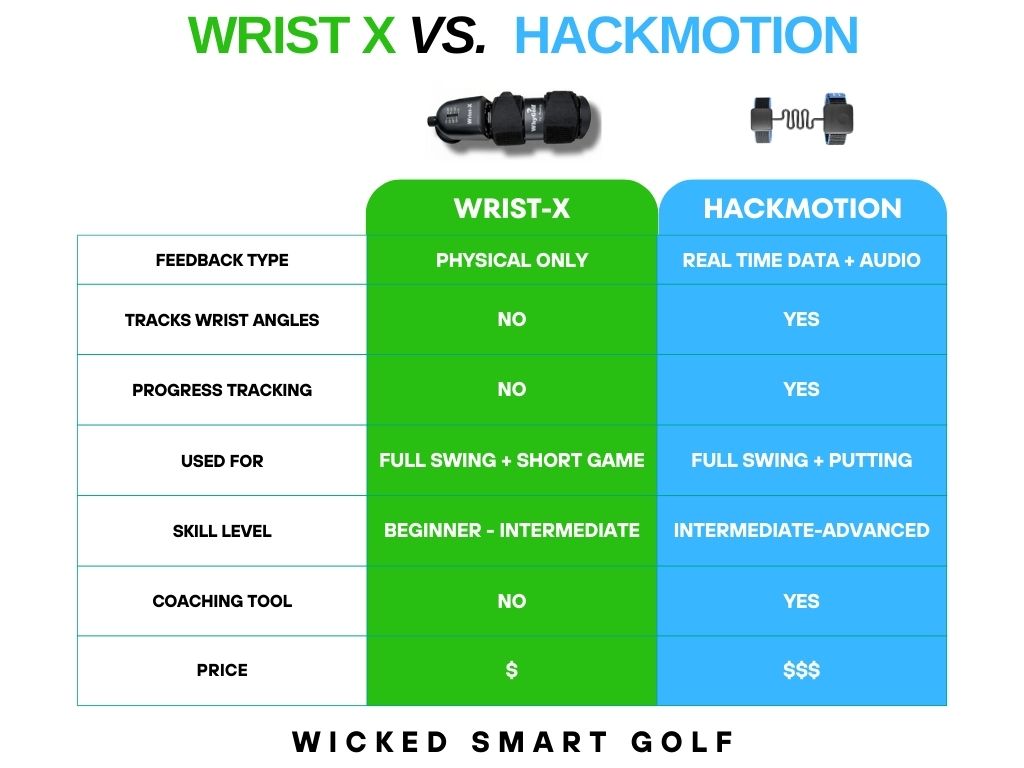
HackMotion is best suited for serious golfers, coaches, and players who want detailed feedback on wrist and forearm movement. It’s ideal for golfers working toward single-digit handicaps or better, and for instructors who want objective data to support coaching decisions. The core program is excellent, and the optional putting upgrades make it an even more complete training system.
Wrist-X is a great low-cost option for beginners, casual golfers, or players who don’t want to deal with technology. It’s also a strong fit for golfers who struggle to understand wrist positions and prefer learning through feel rather than numbers. The simplicity makes it easy to use consistently, which is often more important than having more data.
Both tools can absolutely help your game—the key is choosing the one that fits your experience level, learning style, and budget.
Closing Thoughts
The common thread between Wrist-Xand HackMotion isn’t technology or design—it’s feedback. Golfers improve faster when practice includes clear feedback instead of guesswork, and both of these tools provide that in different ways.
The key is using training aids wisely. They should support learning, not replace it. Neither Wrist-X nor HackMotion is meant to be worn forever or used on every swing. The goal is to build awareness, train better patterns, and then take those feels to the range and the course.
Both tools earn a Wicked Smart Golf stamp of approval because they encourage intentional practice rather than mechanical obsession. Whether feedback comes from sound or data, what matters most is choosing the tool that fits your learning style and helps you practice with purpose.