How to Break 100 in Golf: 20 Easy Tips

Disclaimer: This post may contain affiliate links. As an Amazon Associate, I earn from qualifying purchases—at no extra cost to you.
Breaking 100 is one of the biggest milestones in golf. It’s the point where the game starts to feel more fun, more consistent, and a lot less frustrating.
But here’s the truth…
👉 Most golfers try to break 100 the wrong way.
They chase textbook swings, overthink every shot, and don’t focus on what matter to lower your scores. The goal isn’t to play perfect golf. It’s to avoid the big mistakes that lead to blowup holes.
Because to break 100 and shoot in the 90s, you don’t need birdies. You need:
- More balls in play
- More shots on the green
- Fewer penalties and 3-putts
That’s it. And while I’m a big believer in improving without swing changes, at this level, a few simple fundamentals can make a huge difference.
So in this ultimate guide, I’ll break down 20 proven tips to help you finally break 100 in golf—without overcomplicating the game.
How to Break 100 in Golf
To make this simple and actionable, I’ve broken these tips into four key areas:
👉 Swing
👉 Practice
👉 Short Game
👉 Mental Game
Because breaking 100 isn’t about one thing; it’s about improving across the board. You don’t need a perfect swing, but you do need:
- Solid contact
- Smarter decisions
- Basic short game shots
Breaking 100 becomes a lot more realistic (and repeatable). Let’s get into it.
Swing Tips
You don’t need a perfect swing to break 100, but you do need more consistent contact and fewer big misses. These simple fundamentals will help you keep the ball in play and build a more reliable motion.
1. Use Tour Tempo to Fix Your Rhythm
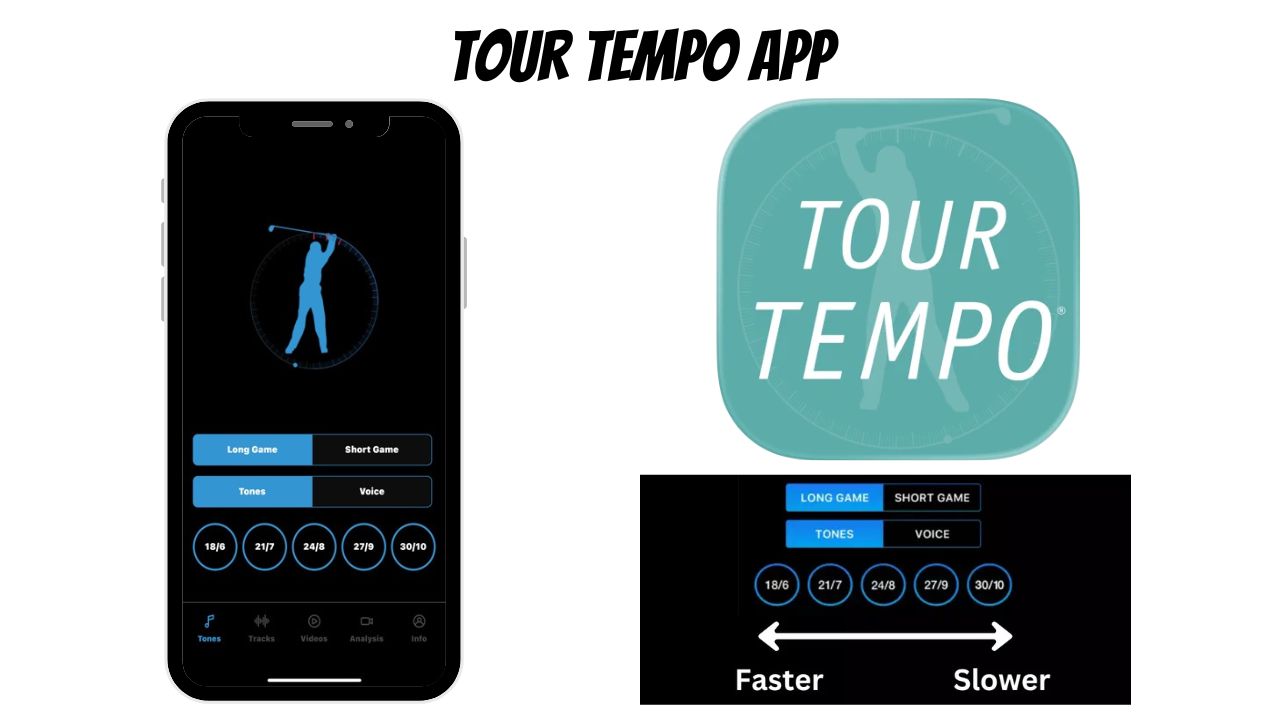
Tempo is one of the most underrated parts of the golf swing, and it can clean up a lot of issues that helps all areas of your game. Most golfers are too slow (I know I was as a beginner), while some rush the backswing and then try to “hit” the ball, which leads to inconsistent contact.
A simple 3:1 tempo helps smooth everything out and makes your swing more repeatable. The Tour Tempo app is one of the easiest ways to learn this and start feeling what good rhythm actually looks like.
2. Fix Your Grip (It Matters More Than You Think)
Your grip is the foundation of your swing, and small changes here can lead to big improvements. If your grip is too weak or too strong, it’s going to be tough to control the clubface consistently.
A grip trainer can help you build a more neutral position and make it easier to return the face square at impact. It’s one of the quickest ways to improve ball striking without overthinking your swing. Grab a grip trainer on Amazon and master one of the most important fundamentals in golf.
3. Improve Your Setup & Alignment
A lot of golfers struggle before they even start the swing because they’re not aimed correctly. If your feet and shoulders are off, your body will try to compensate during the swing.
Take a few extra seconds to pick a clear target and align your body to it. When your setup is consistent, your swing becomes much simpler and more repeatable.
Record your swing with an iRange Sports Stick to avoid any bad habits.
4. Dial in Ball Position
Ball position has a huge impact on contact and trajectory, but it’s often overlooked. If it’s too far forward or back, you’ll start seeing thin shots, fat shots, and inconsistent distance.
- Driver: off front foot
- Fairway woods/hybrids: middle-front
- Irons: middle (slightly up for longer ones)
- Wedges: middle
Once you find the right positions, it becomes much easier to strike the ball solidly.
5. Focus on Solid Contact (Not Perfect Swings)
Remember, breaking 100 isn’t about having a perfect swing, it’s about getting the ball in the air and moving it toward the target. Trying to make every swing look perfect usually leads to more mistakes and frustration.
Instead, focus on making solid contact and keeping the ball in play. A simple, controlled swing that finds the fairway or green will lower your scores much faster than chasing perfection.

Practice Tips
How you practice matters just as much as how much you practice. A little structure and intention can turn wasted range time into real improvement.
6. Use Alignment Sticks to Build Good Habits
Alignment is one of the easiest things to get wrong in practice, and if you’re aimed poorly, you’ll start making compensations in your swing. That’s how bad habits get built without you even realizing it (sadly, I’m speaking from lots of experience here).
Using alignment sticks—or something like the Tour Aim training aid—gives you a clear reference so you can train correctly. It’s a simple way to make sure your practice is actually helping, not hurting.
7. Slow Down When Making Swing Changes
Most beginner golfers try to make swing changes at full speed, which makes it almost impossible to learn anything new. Your body needs time to understand the movement before you add speed.
Slow reps help you build awareness and control, which leads to better results when you gradually speed things up. This is one of the biggest mistakes I see golfers make in practice.
8. Use Training Aids to Build Repetition
Training aids can be incredibly helpful if you use them the right way. They’re designed to give you feedback and help you repeat the correct movement more consistently.
Whether it’s for putting, tempo, or ball striking, they can speed up the learning process. The key is to use them with intention—not just randomly during a session.
Some of my favorite training aids for beginners include wrist trainers, the Tour Tempo app, and the Tour Striker Smart Ball.
9. Slow Down Your Practice (Stop Rushing)
A lot of golfers hit balls way too quickly, raking and firing without any real thought. That might feel productive, but it doesn’t translate to the course.
Take your time between shots, get clear about the goal, go through a routine, and treat each rep like it matters. This is how you train your mind and body to perform when it counts.
10. Go Into Every Session With a Plan
Showing up and “just hitting balls” is one of the biggest reasons golfers don’t improve (or why you might get worse). Without a plan, it’s easy to get too technical or bounce between random ideas.
Have a clear goal for each session, whether it’s working on contact, short game, or consistency. A simple structure turns your practice into something that actually leads to lower scores.
Short Game Tips
This is where scores drop the fastest. Better decisions and simple techniques around the greens can save you shots every single round.
11. Master Your Setup Around the Greens
Short game starts with setup, and small changes here make a big difference. A narrower stance with a little more weight forward helps you make cleaner contact.
This setup promotes a downward strike and more consistency, especially on chips and pitches. Get this right first and everything else becomes easier.
12. Understand Short Game Tempo
Tempo isn’t just for the full swing—it matters even more in the short game. While full swings are closer to a 3:1 ratio, short game shots are typically smoother at 2:1.
The Tour Tempo app is a great way to feel this difference and build consistency. Better tempo leads to better contact and distance control.
13. Putt from the Fringe Whenever You Can
If you have the option, putting is almost always the safer play. Even from the fringe or light rough, it takes risk out of the shot.
You don’t need to get fancy—just get the ball rolling on the ground. This alone can save you multiple shots per round.
14. Keep It Low with Bump and Runs
High shots look cool, but they’re harder to control. Lower shots are more predictable and easier to execute.
Use a bump and run whenever possible and let the ball roll like a putt. This reduces big misses and improves consistency around the greens.
15. Practice from Different Lies
The course doesn’t give you perfect lies, so your practice shouldn’t either. Too many golfers only hit from ideal conditions and struggle when things get tricky.
Spend time hitting from rough, tight lies, uphill, and downhill situations. The more shots you’ve seen before, the more confident you’ll feel on the course.

Mental Tips
Breaking 100 isn’t just physical—it’s mental too, especially with golf nerves. The way you think, react, and stay composed will have a huge impact on your scores.
16. Control Your Body Language & Self-Talk
Your attitude shows up in how you walk, stand, and talk to yourself on the course. Slumped shoulders and negative thoughts only make things worse.
Stand tall, stay composed, and speak to yourself like a coach—not a critic. This keeps your confidence up even after bad shots. Learn 50 mental golf tips here.
17. Stay Positive and Grateful
Golf is hard, but it’s also a game you get to play. Shifting your mindset to gratitude helps you stay relaxed and enjoy the round more.
When you’re less tense, you swing better and make clearer decisions. A positive mindset goes a long way in lowering scores.
18. Play Your Game (Not Someone Else’s)
It’s easy to get caught up in what others are doing, especially if they hit it farther or take different lines. But that usually leads to poor decisions.
Stick to your strengths and play within your abilities. Smart golf beats ego golf every time.
19. Compare Yourself to Your Old Game
Improvement comes from tracking your own progress, not comparing yourself to better players. Everyone is on a different timeline.
Focus on getting a little better each round and building confidence from your own improvements. That’s how you stay motivated and keep improving.
20. Track Your Game to Find Weaknesses
If you don’t track anything, you’re guessing what needs work. And guessing usually leads to wasted practice time.
Track simple stats like fairways, greens, and putts to see where you’re losing shots. Once you know your weaknesses, you can actually fix them. The easiest way to manage your game and track stats is using an app like Shot Pattern.

My Experience
I started out loving the game—but I never had any “natural talent.”
I shot 124 in my first tournament freshman year and worked my way down to 74 in my first event senior year. That’s a 50-shot improvement, and it came from consistent practice, learning the game, and sticking with it.
Now I’m a +2 handicap, shooting in the 70s and occasionally the 60s. So just remember, if you love the game and are relentless, you can do it. Don't get me wrong, it’s still a grind, but that’s what makes it fun, and it’s a journey every golfer should go on.
Closing Thoughts
Breaking 100 isn’t about one big change—it’s about making a lot of small improvements that add up over time. If you focus on better fundamentals, smarter decisions, and more effective practice, you’ll start seeing results faster than you think.
If you want more help, check out my book Wicked Smart Golf: 111 Ways to Play Better Without Swing Changes. It’s packed with simple, proven strategies to help you lower your scores and enjoy the game more.
And if you’re ready for more tips, learn how to break 90, then break 80 or even become a scratch golfer.