How to Break 90 in Golf: 9 Simple Strategies

Disclaimer: This post may contain affiliate links. As an Amazon Associate, I earn from qualifying purchases—at no extra cost to you.
Breaking 90 is one of the most important milestones in golf.
It’s the moment when the game starts to feel less chaotic and more predictable. You stop relying on hope rounds and start building repeatable scores.
But here’s the mistake most golfers make: they assume breaking 90 requires perfect ball-striking, more swing speed, or endless range sessions. It doesn’t.
Breaking 90 is about playing smarter, managing mistakes, and building a game that holds up for 18 holes—not just when things go right. This guide will show you exactly what it actually takes to break 90, based on realistic expectations and proven scoring patterns—not swing theories or wishful thinking.
How to Break 90 in Golf
To break 90 consistently, you generally need to be about a 10–12 handicap. And it’s important to understand what that really means.
A handicap is not your average score—it represents your potential on a good day, not perfection.
When you look at the scoring profile of golfers who break 90, something becomes very clear: they are not flawless—but they are disciplined. Here’s what it statistically looks like based on data from Arccos and Shot Scope:
- Scoring per round: .7 birdies, 6.9 pars, 7.7 bogeys, and 2.9 doubles
- Driving: 259 yards avg distance & 48% of fairways hit
- Need recovery shots: 23% of the time
- Greens in regulation: Only 32%
- Up/Down: 39% after missed GIR
- Sand saves: Just 20%
- Avg. putts: 31.2
Now that you’ve reset your expectations, breaking 90 should feel a lot more achievable.
You don’t need perfection or highlight-reel golf. You need a smarter approach and these nine strategies will get you there.
1. Learn to Be Okay With Bogeys
Here’s the truth most golfers fight against: there are many ways to break 90—and very few of them involve making a lot of birdies. When you look at the scoring data, golfers who break 90 average less than one birdie per round and only about seven pars.
What separates them from golfers stuck in the 90s isn’t brilliance—it’s restraint.
Breaking 90 is about avoiding doubles and big numbers, not chasing hero shots. Double bogeys (or worse) do more than hurt your score. They:
- Crush confidence
- Erase progress quickly
- Make momentum feel fragile
- Often trigger emotional spirals
Sound familiar?
Smart golfers understand this simple principle: bogey is a neutral outcome. Double bogey (or worse) is the enemy. That means:
- Taking your medicine after a bad shot
- Pitching back into play instead of forcing a miracle
- Choosing conservative targets when you’re out of position
If you can turn potential doubles into bogeys—even a few times per round—you’ll be shocked how fast your scores drop. Breaking 90 starts with emotional discipline as much as technical skill.
2. Improve Your Ballstriking
You don’t need to stripe every iron or bomb every drive to break 90. But if you’re in the 12–20 handicap range, chances are ball striking is quietly costing you strokes—especially through low-point control and center contact.
Most high scores don’t come from slightly missed shots. They come from big misses:
- Fat irons that go nowhere
- Thin shots that rocket over greens
- Heel or toe strikes that send the ball into trouble
These are the shots that create recovery situations, force risky decisions, and inflate scores. The goal isn’t perfect contact—it’s predictable contact. To improve ballstriking:
- Use training aids to improve mechanics.
- Focus on setup above all else at the range.
- Practicing ball-first contact with simple, repeatable drills.
When your misses improve, your confidence improves. When your confidence improves, your decisions improve.
3. Increase Driving Distance
Once your ball striking is more predictable, the next lever to pull is distance. Distance makes everything else in golf easier.
According to ShotScope data:
- 10 handicaps average about 259 yards
- 20 handicaps average closer to 225 yards
- Scratch golfers average around 285 yards
If you’re a 20 handicap averaging about 225 yards, going to 260 will make a huge difference. Think about how much easier golf becomes when you are:
- Hitting shorter irons into greens
- You’re carrying bunkers and hazards instead of laying back
Now, this doesn’t mean swinging harder or losing control. It means training speed intelligently.
Here’s how to do it the smart way:
- Train your tempo: Many golfers swing too slow or too quick without realizing it. A consistent, tour-proven tempo helps you move faster without forcing it. Check out Tour Tempo to make it easy to learn proper timing in your swing.
- Start speed training: Speed training teaches your nervous system that faster is safe. Rypstick is the best speed trainer in golf and makes it easy to learn how to add speed quickly.
- Focus on fitness: Strength, mobility, and stability are force multipliers. You don’t need to live in the gym—but you do need a body that can create and handle speed.
The goal isn’t max distance—it’s usable distance. Even 10–15 extra yards off the tee can turn difficult holes into scoring opportunities.

4. Create Pre-Shot Routines
If you don’t have a pre-shot routine for your full swing, short game, and putting, you’ll never stand over the ball with true confidence. Confidence doesn’t come from hoping a shot works; it comes from familiarity and structure.
In fact, pre-shot routines are the only thing all elite players have in common. A good process:
- Calms your mind under pressure
- Improves focus and commitment
- Prevents rushing and second-guessing
- Creates consistency when nerves show up
And most importantly—it gives your brain a job other than worrying about the outcome. Without a routine, it’s easy to:
- Overthink mechanics
- Speed up under pressure
- Lose trust when a round starts going sideways
That’s when mistakes compound. Your routine doesn’t need to be long or complicated; it just needs to be repeatable.
Read my full guide on pre-shot routines to learn more now.
5. Master Your Short Putting
Nothing sabotages a round faster than three-putts. ShotScope data shows that 20 handicaps three-putt roughly twice as often as 10 handicaps—and that gap alone can account for multiple strokes per round.
The good news? Short putting is one of the fastest ways to lower scores. To eliminate three-putts, focus on three things:
- Tempo: Smooth and consistent beats jabby and rushed
- Setup: Eyes, posture, and ball position matter more than stroke style
- Reps: Especially before the round, when confidence is built
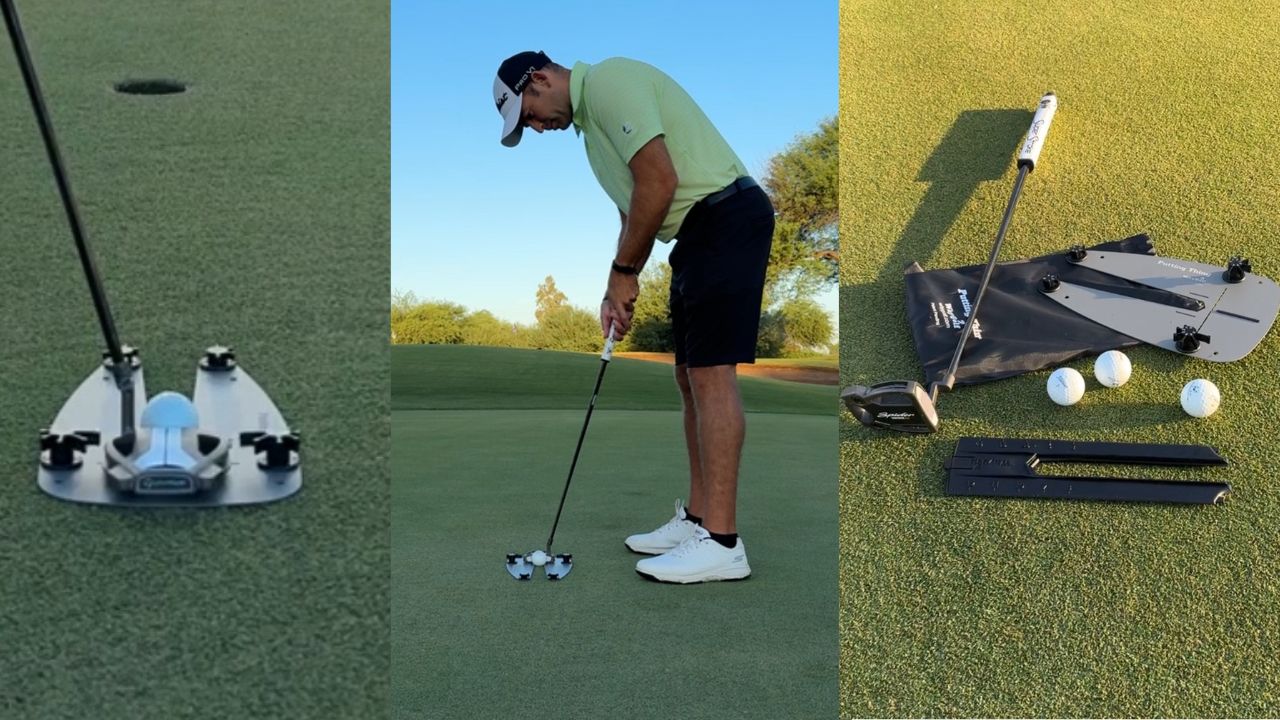
One of my favorite putting aids is the Putting Thing from WhyGolf. This small device ensures you have the proper start line so you can drain more putts.
Short putts aren’t about mechanics—they’re about trust. Build trust, and three-putts disappear quickly.
6. Calculate Your Carry Distances
Guessing distances is one of the most expensive habits in golf. Many golfers know how far they hit a club when they flush it—but not how far it carries on an average strike.
To break 90, you must know:
- Your carry distances, not just total
- Your reliable yardage, not your best-ever shot
This allows you to:
- Hit more greens in regulation
- Fly hazards instead of guessing
- Stand over the ball with confidence
Distance clarity removes indecision—and indecision causes bad swings. To learn more about distance control, use golf apps like Arccos Golf, which maps out every swing during the round.
7. Develop Short Game Skills
You don’t need a highlight-reel short game to break 90. You need predictability.
Think about it, scratch golfers only hit about 50% of greens in regulation (and they’re some of the best amateurs). Needless to say, 10 or 20 handicaps only hit a small percentage of greens.
Your ability to get up and down—or at least avoid doubles—matters more than you think. To become a wedge wizard:
- One stock chip shot
- One reliable pitch shot
- Basic bunker shot to escape in one
Playing the right wedges (loft, lie, and forgiveness) can also make a big difference.
When your short game turns disasters into bogeys, your confidence stays intact and your scorecard stays clean.
8. Learn to Lag It Closer
Long putting is really about distance control, not making putts. Most three-putts start with a poor first putt that finishes too far from the hole—leaving an uncomfortable second putt under pressure.
To lag it closer:
- Prioritize speed over line on putts outside 20–30 feet
- Practice long putts with the goal of finishing inside the 10% rule (ex. If you have a 50-foot putt, anything inside 5-feet is a “win.”)
Better lag putting turns stressful second putts into tap-ins and lower scores.
9. Improve Your Mental Game
The mental game is a massive part of golf—and it’s often the difference between a round that holds together and one that unravels. For breaking 90, focus on just two mental skills:
- Self-talk: Pay attention to what you say after bad shots. Negative, emotional language leads to rushed decisions and poor swings. Neutral, factual self-talk keeps you present and in control.
- Body language: Your posture, pace, and reactions matter more than you think. Strong body language reinforces confidence—even when the last shot wasn’t great.
You don’t need to be positive all the time. But you do need to stay composed and engaged.
That alone can save multiple strokes per round. To learn more about the mental game, read my full blog with 50 mental golf tips.
Closing Thoughts
Remember, breaking 90 isn’t about perfect swings or chasing birdies—it’s about smarter decisions, better habits, and limiting big mistakes. If you focus on these strategies and commit to steady improvement, lower scores will follow.
To learn more strategies to play better fast, read these blogs next:
👉 7 Easy Course Management Tips
👉 Best Golf Books to Upgrade Your Golf IQ
👉 How to Play Smart Golf (No Swing Changes)
Play smart, stay patient, and trust the process. Soon enough, you'll be reading my blog on how to break 80 consistently.