Whoop Review: How to Use for Golf
Disclaimer: This post may contain affiliate links. As an Amazon Associate, I earn from qualifying purchases—at no extra cost to you.
Wearables are everywhere now—steps, calories, workouts, etc... but most of them focus on what you did, not how ready your body was to do it.
That’s where WHOOP is different.
WHOOP is arguably the most advanced wearable in the world and easy to see why it's so popular worldwide. It’s a recovery and performance wearable designed to help you understand how your sleep, stress, training, and lifestyle habits affect how you feel and perform day to day.
In this Whoop for golf review, I’ll start with a general breakdown of the system—what it is, how it works, and what the data actually means. Then, later on, I’ll narrow the focus and explain how golfers can use WHOOP to make better decisions around practice, recovery, and consistency on the course.
If you’ve ever had days when your body just didn’t cooperate—even though nothing seemed “wrong”— WHOOP is designed to help explain why.
Whoop Review: A Wicked Smart Game Changer
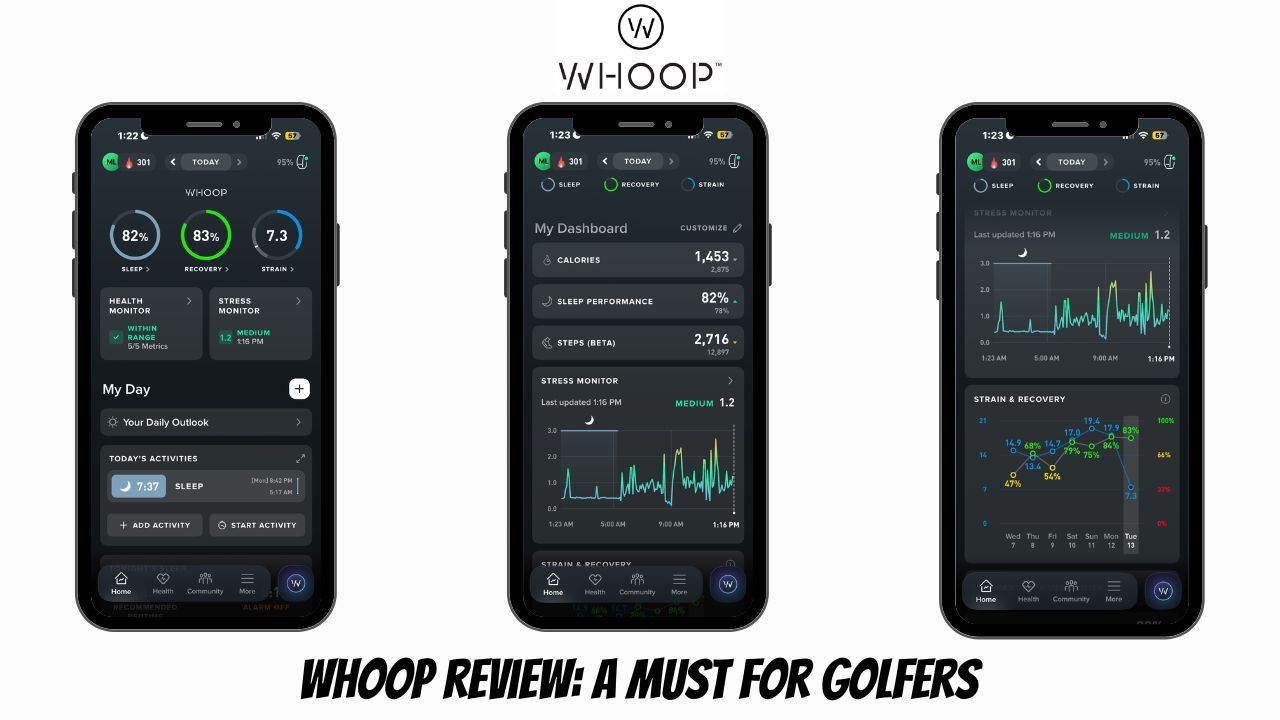
WHOOP is a wearable performance tracker that focuses on recovery, strain, and sleep. With the newest updates, it also tracks daily steps and estimated calorie burn.
Instead of giving you surface-level metrics, WHOOP collects continuous data throughout the day and night to help you understand how your body is responding to stress—both physical and mental. You wear the band all day (on your arm or wrist), during workouts, and while you sleep, and the app turns that data into simple daily insights.
At a high level, WHOOP tracks:
- Daily steps
- Sleep duration and quality
- Heart rate and heart rate variability
- Recovery readiness from one day to the next
- Daily strain (how much stress your body takes on)
The goal isn’t to chase perfect numbers. The goal is to recognize patterns over time.
WHOOP uses those patterns to give you a daily recovery score, which reflects how prepared your body is to handle stress that day. A high recovery score suggests your body is primed to push harder. A lower score is a signal to dial things back, focus on recovery, or manage expectations.
Unlike most fitness wearables, WHOOP doesn’t have a screen and doesn’t constantly distract you. It’s designed to collect data quietly in the background, then present it in a way that helps you make better decisions about training, rest, and workload.
Here’s how it can help your performance and train like an athlete.
Healthspan & Pace of Aging: Understanding Your Biological Age
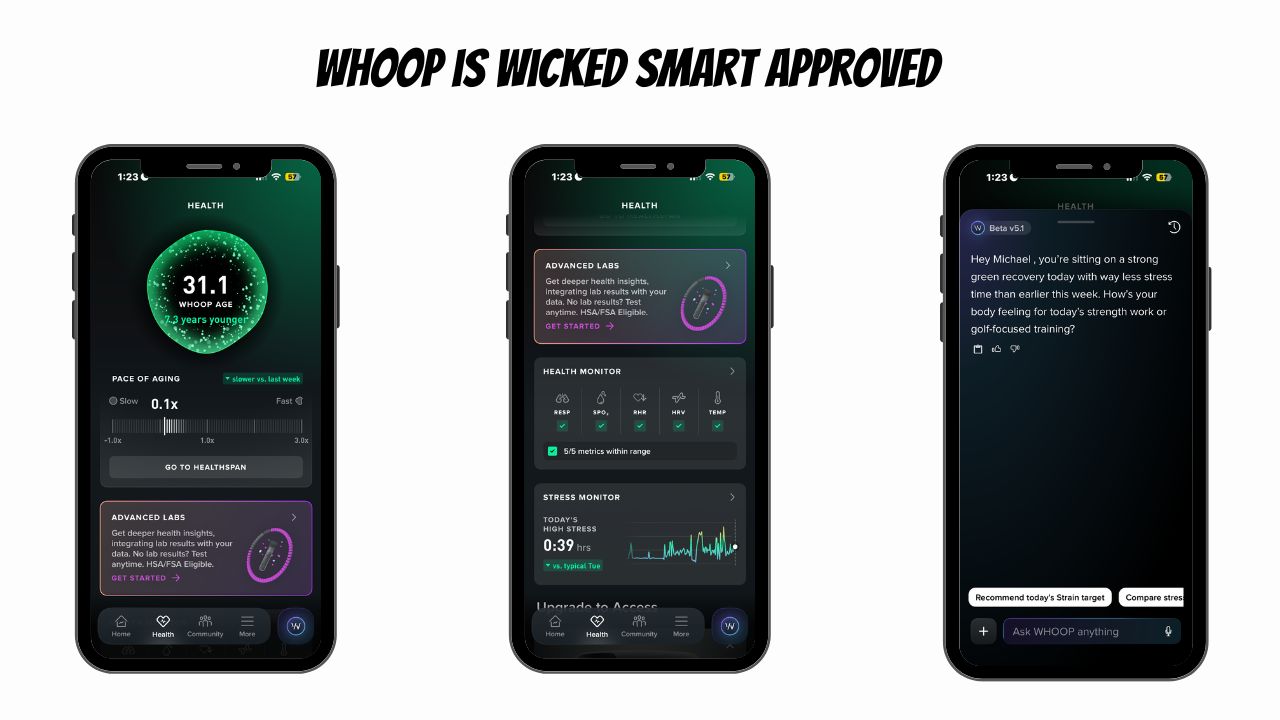
One of WHOOP’s most interesting features is how it looks beyond workouts and starts tracking long-term health trends, including your pace of aging through its Healthspan insights. Instead of just telling you how old you are on paper, WHOOP estimates how your body is aging based on real data—things like sleep quality, recovery, cardiovascular fitness, and daily strain.
In simple terms, it helps answer the question: Is my lifestyle helping me age better or worse than average?
For example, at the time of writing this, I am 38 years old chronologically, but WHOOP estimates my biological age closer to 31. After doing a DEXA Scan and using the HUME Scale to evaluate this, it was within a month, wicked accurate!
Inside the app, WHOOP also shows which habits are helping or hurting that trajectory—such as time spent in different cardio zones, sleep consistency, recovery scores, and overall workload. It’s a long-term view that rewards consistency, not extremes.
Health & Stress Monitoring: Spotting Issues Before You Feel Them
WHOOP also tracks several key health markers that help you understand how your body is handling stress—and sometimes flags issues before you feel noticeably off.
It monitors metrics like:
- Respiratory rate
- Skin temperature trends
- Resting heart rate (RHR)
- Heart rate variability (HRV)
- Blood oxygen levels (SpO₂)
By looking at changes in these signals over time, WHOOP can detect when your body is under unusual stress — whether from poor sleep, travel, illness, or accumulated fatigue. Many users notice patterns where metrics shift a day or two before they feel run down, which allows them to adjust training, workload, or recovery proactively instead of reacting after the fact.
This kind of insight is especially valuable if you train, travel, or live a busy lifestyle where stress can quietly pile up.
WHOOP AI Coach: Turning Data Into Actionable Insights
WHOOP includes an AI-powered coach that lets you interact directly with your data inside the app. Instead of digging through charts and metrics, you can simply ask questions and get clear explanations and recommendations.
You can use WHOOP AI to:
- Learn how to improve HRV or recovery
- Understand why your recovery changed
- Get suggestions based on your recent trends
- Identify habits that are helping or hurting your sleep
What makes this feature useful is accessibility. All of your data—sleep, strain, recovery, health trends—lives in one place, and the AI helps translate it into plain English. For people who want insights without becoming data analysts, this makes the app feel far more usable and practical on a daily basis.

Whoop For Golf
Now that you understand what WHOOP does in general, let’s talk about how to actually use it for golf. As you can see from the image above, you burn a lot more calories than you think playing 18 holes of golf.
I’ve always been a wearable guy—I used Fitbit for years before finally switching to WHOOP in early 2025. Looking back, it’s been one of the best decisions I’ve made for both my golf and my overall fitness. Not because it magically made me better, but because it helped me make smarter decisions around training, recovery, and workload.
After seeing players like Justin Thomas and Rory McIlroy wearing WHOOP, I figured it was time to try it myself. What stood out quickly was that WHOOP didn’t just track activity—it helped me understand how golf, training, and life stress were interacting behind the scenes.
Here’s how I use WHOOP specifically for golf.
Tracking Workouts
One of the most useful things I do with WHOOP is log my workouts intentionally, not just for daily feedback, but to evaluate patterns over an entire month. I categorize my training so it actually means something:
- Running
- Full-body strength sessions
- Yoga and mobility work to swing better
- Functional, golf-specific training and speed work
- Stadium steps category for incline cardio (great to train endurance for walking hilly courses)
By logging workouts this way, WHOOP’s AI can help me review trends over time—not just how hard I trained, but how balanced my training actually is. It’s easy to think you’re doing enough strength or mobility until you see the monthly breakdown. This keeps me honest and helps me adjust before imbalances show up in my game or my body.
Understanding Strain
Golf doesn’t always feel physically demanding—until you look at the strain data.
WHOOP has been eye-opening when it comes to understanding how tournaments, multi-day events, and long practice weeks impact my overall strain. Walking multiple rounds, warming up properly, hitting balls, and managing stress all add up, even if you’re not lifting weights.
By tracking strain during tournament weeks, I can see when I’m pushing my body harder than I realize and when I need to prioritize recovery instead of adding more work. This has helped me avoid overtraining and show up fresher when it matters most
Calories and Steps
Another area WHOOP has helped with is understanding the difference between walking and riding, as noted above.
Walking 18 holes adds up quickly in both steps and calorie burn, especially over consecutive days. WHOOP gives me a clearer picture of how much energy I’m actually using, which helps me fuel more intentionally instead of guessing or under-eating.
When I ride, I can see how much lower the physical demand is and adjust nutrition and recovery accordingly. Over time, this awareness has helped me stay more consistent late in rounds and across long golf weeks.

My Experience
At this point, I can confidently say I’ll never not use WHOOP, and it's easy to see why it made my list of the best golf fitness apps.
It’s become a staple not just for my golf, but for how I manage my health, fitness, recovery, and overall lifestyle. WHOOP keeps me accountable without being intrusive—it helps me see patterns I’d otherwise miss and make better decisions before small issues turn into bigger ones.
From golf training and tournament weeks to strength work, running, and recovery, WHOOP gives me a clear picture of how everything fits together. I also pair it with tools like GolfForever and Fit For Golf, which has been a powerful combination for staying healthy, moving well, and performing consistently. The AI insights make the data easy to understand and apply, which is a big reason I’ve stuck with it long-term.
Closing Thoughts
WHOOP isn’t about obsessing over numbers—it’s about learning how your body responds to stress, recovery, training, and daily habits.
That’s why it’s a core part of my approach to golf and longevity, and why it plays a role in my upcoming book, The Wicked Smart Golf Fitness Formula. When you understand your habits and how they affect your body, you can train smarter, play better golf, and support a longer, healthier life.
Whether your goal is to play better golf, feel more consistent physically, or simply take better care of yourself, WHOOP can benefit just about anyone willing to pay attention and apply what it teaches. For me, it’s been well worth the investment—not just to play golf better, but to play golf longer and live better in the process.