How to Increase Golf Swing Speed in 2026

Disclaimer: This post may contain affiliate links. As an Amazon Associate, I earn from qualifying purchases—at no extra cost to you.
If you want to increase golf swing speed to improve your golf game, I’ve got you covered.
Since 2020, I’ve tested just about everything—speed sticks, strength programs, mobility routines, apps, and lessons—to figure out what actually works. What follows isn’t theory. It’s what’s helped me and countless members of my audience hit the ball farther without losing control.
If your goal is to hit the ball farther, shoot lower scores, and stop feeling like you have to swing out of your shoes, this is for you. Today, I'll help you understand how to increase golf swing speed even if you're not 20 years old or extremely athletic.
The good news is you don’t need to rebuild your entire swing or live in the gym to increase swing speed. When you stack the right pieces in the right order, speed shows up naturally and your consistency often improves at the same time.
How to Increase Golf Swing Speed in 2026
Before you jump into speed sticks or advanced training, it’s important to understand one key principle: speed is a skill. And one you can develop, regardless of age or background. Since 2020, I’ve gone from 105 to 112 mph (and currently working to 115 or more), which has helped me become a plus handicap. If I can do it, so can you!
The fastest golfers in the world didn’t get there by guessing or swinging harder—they built a foundation that allowed speed to emerge safely and repeatably. The seven tips below follow that exact progression.
You’ll start with fundamentals that unlock free speed, then move into physical training, mobility, and finally dedicated speed work. When done in this order, you’ll not only swing faster, you’ll hit the ball farther and more consistently.

1. Fix Your Setup
Most golfers are leaving distance on the table before they ever swing the club.
Your setup has a massive influence on how much speed—and launch—you can actually create. If your body isn’t positioned to move fast, no amount of effort will fix it.
Start by checking these key setup fundamentals with the driver:
- Enough loft on the club: Too little loft reduces launch and carry, even if clubhead speed is decent.
- Proper shoulder tilt: Trail shoulder slightly lower than lead shoulder to promote an upward strike.
- Wide stance: Slightly wider than shoulder width to create stability and ground force.
- Flared feet: Helps with rotation and reduces restrictions in the backswing and follow-through.
- Grip pressure around 4/10: Tension kills speed. If you’re squeezing the club, you’re slowing it down.
These adjustments alone often lead to immediate distance gains because they allow your body to move faster without swinging harder.

2. Improve Ballstriking
Once your setup and equipment are dialed in, the next step to increase swing speed and distance is simple: find the center of the clubface more often.
Toe and heel strikes absolutely kill distance—even with modern, forgiving drivers. You can swing faster, but if contact is poor, the ball won’t go anywhere.
Here are the biggest levers to improve ball striking:
Dial in Your Grip
Your grip directly influences clubface control. If the face is inconsistent, speed won’t translate to distance. A simple grip trainer can help you build better awareness and consistency without overthinking it.
Use Training Aids to Fix Your Biggest Miss
Most amateurs struggle with either:
- A takeaway that’s too far inside, or
- A downswing that’s too steep
Both patterns often lead to slices and slices rob golfers of massive amounts of distance. The right training aid can clean this up faster than trying to “feel” it on the range.
Improve Your Tempo
This was a big one for me (and most golfers). Many golfers think they’re quick in the downswing, when in reality the issue is a backswing that’s way too slow.
Great players typically complete their swing in about 1 second, while amateurs are often in the 1.5 to 3 second range.
Speeding up your overall tempo—especially the backswing—can unlock speed without feeling out of control. Tools like Tour Tempo are extremely effective here.
Hit More Golf Balls (The Right Way)
Finally, ball striking improves with repetition. Quantity produces quality when done correctly.
Structured practice—focused on contact, feedback, and intent—builds consistency far faster than occasional range sessions. Better contact means more ball speed. More ball speed means more distance, without swinging harder.
3. Add Strength
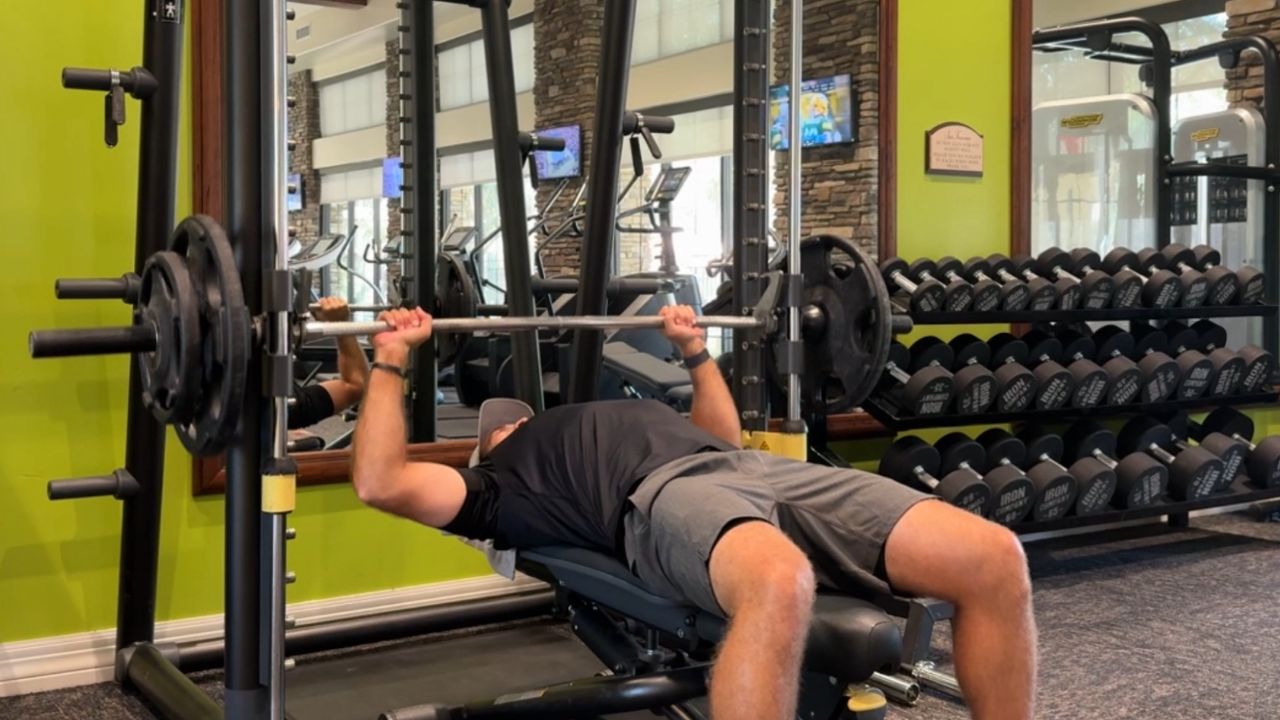
During the 2024 offseason, I saw a massive jump in distance simply by committing to regular strength training. Not extreme workouts. Not bodybuilding. Just smart, consistent training that supported golf performance.
You don’t need to live in the gym to increase swing speed—but you do need to build a body that can produce and handle force.
The simplest approach?
- 2–3 full-body sessions per week
- Focus on progressive overload (gradually increasing resistance over time)
- Prioritize foundational movements: pushing, pulling, hinging, squatting, rotating
This is the same framework I outline in my book, The Wicked Smart Golf Fitness Formula, because it works for golfers of all ages. Strength gives you a bigger engine. A bigger engine makes speed easier to access—and safer to maintain.
Without it, you’re trying to create speed with timing and effort alone. That’s a recipe for inconsistency and injury.

4. Improve Mobility
Strength without mobility is a dead end for most golfers. The reality is that many golfers:
- Sit for long hours
- Lack shoulder and ankle flexibility
- Have limited hip and thoracic mobility
When your body doesn’t move well, it restricts rotation, limits speed, and forces compensations that kill distance.
The solution isn’t hour-long stretching sessions. Instead, make mobility part of your warm-up routine—before practice, before speed sessions, and before you play.
A few targeted movements to open the hips, spine, and shoulders can dramatically improve how freely you swing. Better mobility allows you to:
- Rotate faster
- Avoid injuries
- Maintain balance
- Access strength you already have
Think of mobility as the bridge between strength and speed. Skip it, and you leave distance and longevity on the table.
5. Use Speed Trainers
Once you’ve built the body and cleaned up the fundamentals, it’s time to introduce overspeed training.
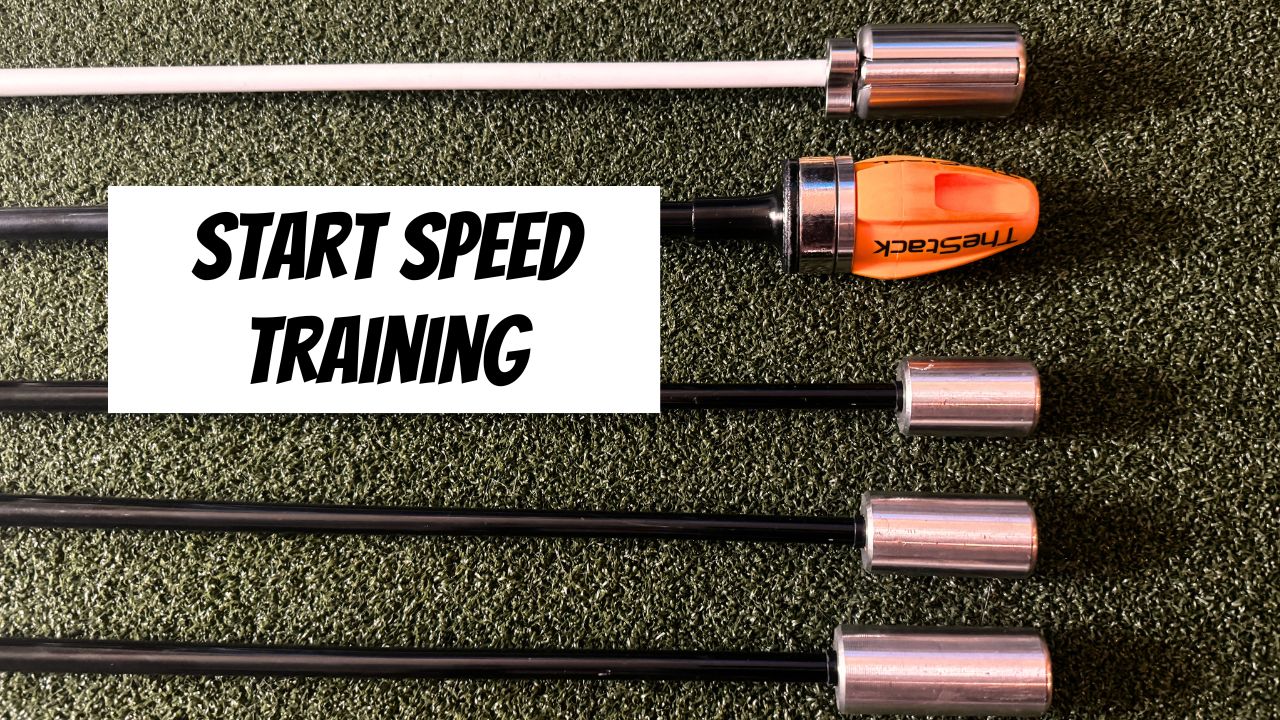
Overspeed training has been used for years in other sports like baseball and track. But golfers are only recently catching on to how effective it can be for increasing swing speed.
The concept is simple: you train your nervous system to move faster than it’s used to by swinging lighter (and sometimes heavier) implements. Over time, your body adapts—and that new speed shows up in your normal swing.
There are several popular speed trainers on the market, including Rypstick, SuperSpeed, The Stack System, and Speed Toad. I’ve tested them all, and for most golfers who want simple, effective, and time-efficient speed training, Rypstick has been my favorite.

Here’s why speed training works best when done correctly:
- 2–3 sessions per week
- 15–20 minutes per session
- Short, high-intent swings (not fatigue-based workouts)
When combined with strength and mobility, speed training helps golfers add distance surprisingly fast. Rypstick claims many golfers see longer drives in 40 days or less, and that lines up closely with what I’ve seen personally and with golfers I work with.
If you’re looking for a straightforward way to train speed without overthinking it, Rypstick is a great place to start. You can save 20% by using code WICKEDSMART at checkout.
6. Try Speed Sessions
Speed trainers like Rypstick are incredibly effective—but there’s one thing they don’t do: use while hitting golf balls.
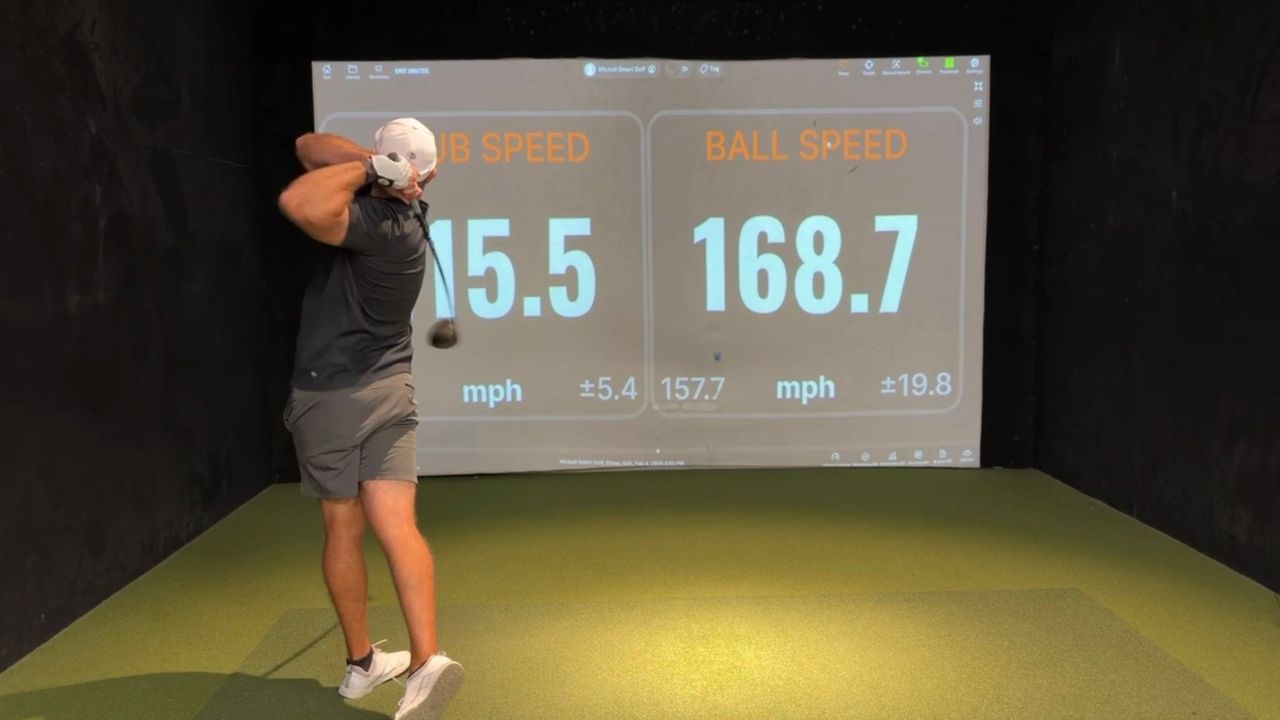
That’s why focused speed-only sessions are such a powerful complement to overspeed training. These sessions teach you how to apply your new speed with the clubs you actually use on the course.
Ideally, do these sessions at the range or on a simulator with a launch monitor so you can track clubhead speed and ball speed in real time.
Here’s a simple structure:
- Start with a proper warm-up routine
- Work progressively through your bag
- Finish with speed-only swings using your driver (or fairway wood)
During these speed sessions, the goal isn’t accuracy—it’s intent. You’re training your body and brain to move faster while still swinging a golf club, not a training stick.
Optional: HitTS Speed Trainer
One of the challenges with speed training is bridging the gap between training tools and real shots. That’s where the HitTS Speed Trainer stands out.
Unlike most speed trainers, HitTS is a hittable driver with adjustable weights that you can use on a simulator or at the range. It allows you to train speed while seeing real ball flight and data—something most speed tools don’t offer.
It’s also a great way to apply concepts used by world long drive champion Fast Eddie, helping golfers learn how elite speed players generate power without losing control.
If you want to dive deeper, you can read my full HitTS Speed Trainer review.

7. Stay Consistent
Increasing swing speed isn’t an overnight fix—it’s a process. For most golfers, noticeable gains show up in 8–10 weeks, though some players see results sooner.
The key is consistency, not intensity. You don’t need to train every day. A few focused sessions each week is all it takes.
What matters most is that you:
- Keep strength training in your routine
- Maintain mobility so your body moves freely
- Continue overspeed training and speed sessions
Do this consistently, and you’ll quickly separate yourself from the golfers you play with. While most players are just hitting balls and hoping for distance, you’ll be training speed with intent.
That’s how you gain a real edge—by training differently than most golfers.
Closing Thoughts
If you want to increase swing speed without sacrificing control or consistency, it comes down to stacking the right habits in the right order.
- Download the Tour Tempo app to improve your sequencing
- Get started with Rypstick and save 20% using code WICKEDSMART
- Read The Wicked Smart Golf Fitness Formula to build a body designed for distance
Then, create a simple plan—and stick to it for the next 8–10 weeks. Train smarter, swing faster, and enjoy watching your drives finally keep up with the work you’re putting in.