How to Break 85 in Golf Consistently (9 Simple Steps)

Disclaimer: This post may contain affiliate links. As an Amazon Associate, I earn from qualifying purchases—at no extra cost to you.
Most golfers think breaking 85 requires a perfect golf swing. It doesn’t. While mechanics are key to break 100 and then break 90, more parts of the game factor in here.
In my experience as a competitive golfer and mental golf coach, scores usually stay stuck above 85 because of poor decisions, penalty strokes, weak putting, emotional mistakes, and inconsistent practice habits—not because someone has an ugly swing.
The good news is that those areas are much easier to improve than rebuilding your mechanics from scratch.Today, I will help you learn how to break 85 consistently so you can lower your handicap and maybe even get some rounds in the 70s.
How to Break 85 in Golf
Here’s the truth: you don’t need tons of birdies or perfect ball striking to break 85.
You simply need to eliminate big mistakes, avoid doubles, improve your short game, and learn how to manage your game better. That’s what this guide is all about.
Instead of overloading you with swing thoughts, I want to help you focus on the things that actually lower scores fast: strategy, mental game, driving distance, practice habits, and smarter golf.
1. Practice Strategically
Most golfers practice the wrong way. They beat balls for an hour, rapid-fire 7-irons, and hope their scores magically improve. But if you want to break 85, your practice needs to become much more intentional.
The fastest way to improve is by working on weaknesses, not just the parts of golf you enjoy most.
For most golfers, that means:
- Making driver a priority
- Spending more time on putting and short game
- Practicing routines and pressure situations
- Using stats to guide practice sessions
One of the biggest mistakes I see is golfers spending almost all their time on technical swing changes while ignoring the scoring clubs. Breaking 85 usually comes more from eliminating mistakes than creating perfect swings.
Use stats from apps like Arccos, Shot Pattern, DECADE, or even simple scorecard tracking to identify where you’re losing shots. If you average multiple penalties per round, practice with the driver often. If you struggle with 3-putts, spend more time on speed control. Let your data guide your practice instead of guessing.
2. Develop a Warm-Up Routine
If you’re serious about breaking 85, you need to start warming up before rounds. Too many golfers expect to play well while showing up tight, rushed, and mentally unprepared.
No amount of practice can overcome a sore back, poor mobility, or having zero feel on the greens during the first few holes.
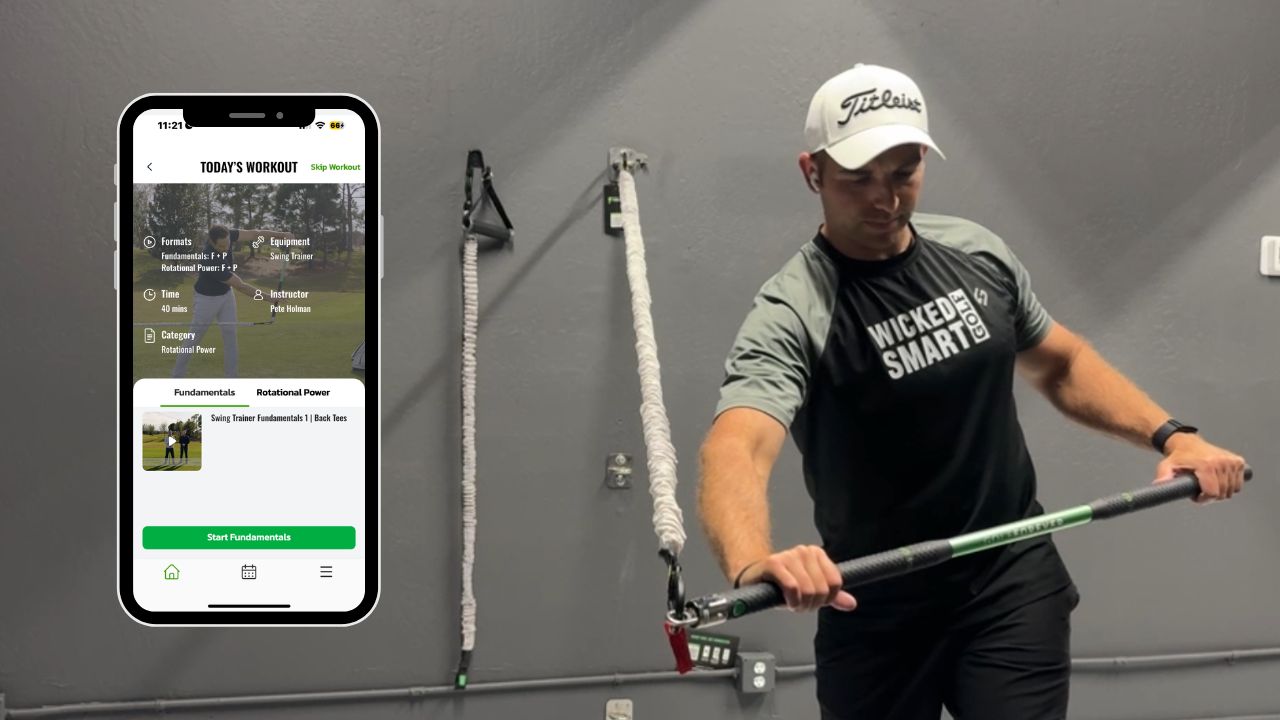
Start with a dynamic warm-up to get your body moving and loose. This can be as simple as mobility exercises, resistance bands, or a system like GolfForever to activate your body before you swing.
Then move into a strategic golf warm-up:
- Start on the putting green with lag putting for speed
- Hit short putts to build confidence
- Spend time chipping and pitching
- Finish on the range, focusing on tempo and rhythm, not mechanics
When your body and mind are ready on the first tee, you immediately give yourself a better chance to score well instead of waiting until hole 6 to finally “find it.”
3. Increase Driving Distance
Longer drives directly correlate to lower handicaps. The farther you hit the ball, the shorter your approach shots become, which makes golf dramatically easier.
The problem is most golfers hope distance simply shows up one day instead of training for it consistently.
Speed is a skill. Just like putting or chipping, it needs to be developed over time.
That’s why I’m a huge believer in:
- Speed training
- Tempo training
- Strength and mobility work
Tools like Tour Tempo can help improve sequencing and rhythm, while systems like Rypstick or the HiiTS driver help golfers train for more clubhead speed safely and effectively.
The key is consistency.
You won’t gain 20 yards overnight, but small speed gains over time can completely transform your scoring potential and help you start shooting in the 70s more often. Watch the video below to learn more about Rypstick vs. SuperSpeed.
4. Avoid Penalties and Double Bogeys
If you want to break 85 consistently, you must avoid blowup holes.
Penalty strokes and double bogeys don’t just hurt your scorecard—they destroy momentum and negatively impact your mental game. One bad decision can quickly turn into multiple bad holes if you let frustration take over.
Bogeys are going to happen. Even PGA Tour players average close to three bogeys per round. You can’t get angry every time you make one.
In fact, you can make 12 bogeys and still shoot 84 on a par-72 course without making a single birdie. That’s why breaking 85 is usually more about avoiding disasters than playing perfect golf.
To eliminate doubles:
- Play away from trouble
- Stop forcing hero shots
- Chip out when needed
- Aim for the middle of greens
- Stay patient after mistakes
Golf rewards discipline far more than aggression for most mid-handicap players.
5. Purposeful Putting
Putting is one of the fastest ways to lower your scores because it directly impacts every round you play. For most golfers trying to break 85, putting really comes down to two things:
Make More Short Putts
This is the lowest-hanging fruit in golf improvement.
Too many golfers stand over short putts with no process, no commitment, and no confidence. Developing a consistent pre-shot routine can completely change your putting under pressure.
The best putters in the world all have routines that help them:
- Commit to the line
- Control tempo
- Stay confident
- Eliminate negative thinking
Inside six feet is where golfers can save a massive amount of strokes quickly. Use tools like Tour Aim, WhyGolf Putting Thing, or the Pro Path Mirror to improve your fundamentals.
Learn the Art of Lag Putting
Great lag putting dramatically reduces 3-putts and takes pressure off your short game. Spend more time practicing putts from 30 to 40 feet (the average length birdie putt).
Focus on speed control instead of trying to make every long putt. One simple trick is allowing more break on long putts to improve speed and leave yourself easier tap-ins.
I also highly recommend practicing lag putting before rounds to quickly develop feel for green speeds.

6. Calculate Carry Distances With Each Club
If you want to hit more greens and make smarter decisions, knowing your carry distances is non-negotiable. Most golfers guess their yardages based on their “perfect shot” instead of their stock carry numbers. That leads to coming up short, missing greens, and short-siding themselves around the course.
Wicked smart players know their numbers.
Spend time using a launch monitor or simulator setup to map out your real carry distances with every club in the bag. This makes club selection dramatically easier and helps you play with more confidence.
Some of my favorite tools for this are launch monitors from Voice Caddie SC200 Plus or SC300i, because they make it easy to practice indoors, at the range, or during offseason training sessions.
7. Stop Laying Up
One of the biggest mistakes mid-handicap golfers make is laying up too often.
Unless there’s a forced carryover, water, out of bounds, or serious trouble you truly can’t cover, your goal should usually be getting the ball as close to the green as possible.
Too many golfers convince themselves they need a "perfect yardage" like 100 yards when, in reality, most players are far better off hitting a wedge from 40–60 yards closer to the green.
Your average shot from 60 yards is often better than your "perfect" full wedge from farther away. Getting closer also:
- Creates easier ups and downs
- Gives you more birdie chances
- Opens the door for eagle opportunities on par 5s
- Reduces pressure on long approach shots
The key is playing smart aggressive golf, not fearful golf.
8. Master Your Mental Game
Your mental game has a massive impact on whether you break 85 consistently. Most golfers don’t lose strokes because of mechanics alone—they lose them from frustration, poor decisions, tension, and carrying mistakes from hole to hole.
That’s why learning simple mental game strategies can lower your scores quickly. A few of the biggest keys include:
- Having a consistent pre-shot routine
- Using a post-shot routine after mistakes
- Laughing off bad shots instead of getting angry
- Breathing to calm your nerves
- Staying focused on one shot at a time
You’re going to hit bad shots. Every golfer does. The key is preventing one mistake from turning into multiple holes of frustration and poor decisions.
Golf becomes much easier when you stop fighting yourself mentally.
9. Keep Improving Ballstriking
While breaking 85 isn’t all about swing mechanics, improving your ball striking still matters. The better you strike the golf ball, the easier the game becomes:
- More greens in regulation
- Better contact
- More consistent distances
- Fewer recovery shots
- Less stress around the course
The key is improving intelligently instead of chasing random swing tips online every week.
Work with a coach you trust, record your swing periodically, and use training aids that provide real feedback. Tools like HackMotion can help you better understand clubface control, wrist conditions, and impact patterns instead of simply guessing what’s happening in your swing.
You don’t need a perfect swing to break 85. But continuing to improve your contact and consistency will absolutely help you shoot lower scores over time.

My Experience
One of the biggest things I’ve learned in golf is that improvement never really ends. No matter how good you get, there’s always another level to reach.
The golfers who break 85 consistently are usually the ones who stay patient, curious, and committed to improving over time. They don’t panic after bad rounds or constantly search for overnight fixes.
One thing I highly recommend is staying off YouTube swing tip rabbit holes. Watching random swing videos every night usually creates more confusion than progress. Instead, focus on building a clear system for your practice, your routines, and your course management.
Golf gets much easier when you stop chasing perfection and start focusing on scoring.
Closing Thoughts
Breaking 85 comes down to doing the simple things better and more consistently.
Hit the ball farther. Hit more greens. Make more putts.
Avoid penalties and doubles. Practice with intention instead of randomly beating balls.
Most importantly, start tracking your stats if you haven’t already. Understanding where you’re actually losing shots is one of the fastest ways to improve your game and lower your scores.
Stay patient, stay disciplined, and keep showing up consistently. If you do that, breaking 85 is absolutely achievable—even without rebuilding your golf swing.
Next, make sure to read: